
White Deer, Gray Areas: What Hunters Need to Know About Albino Deer Laws
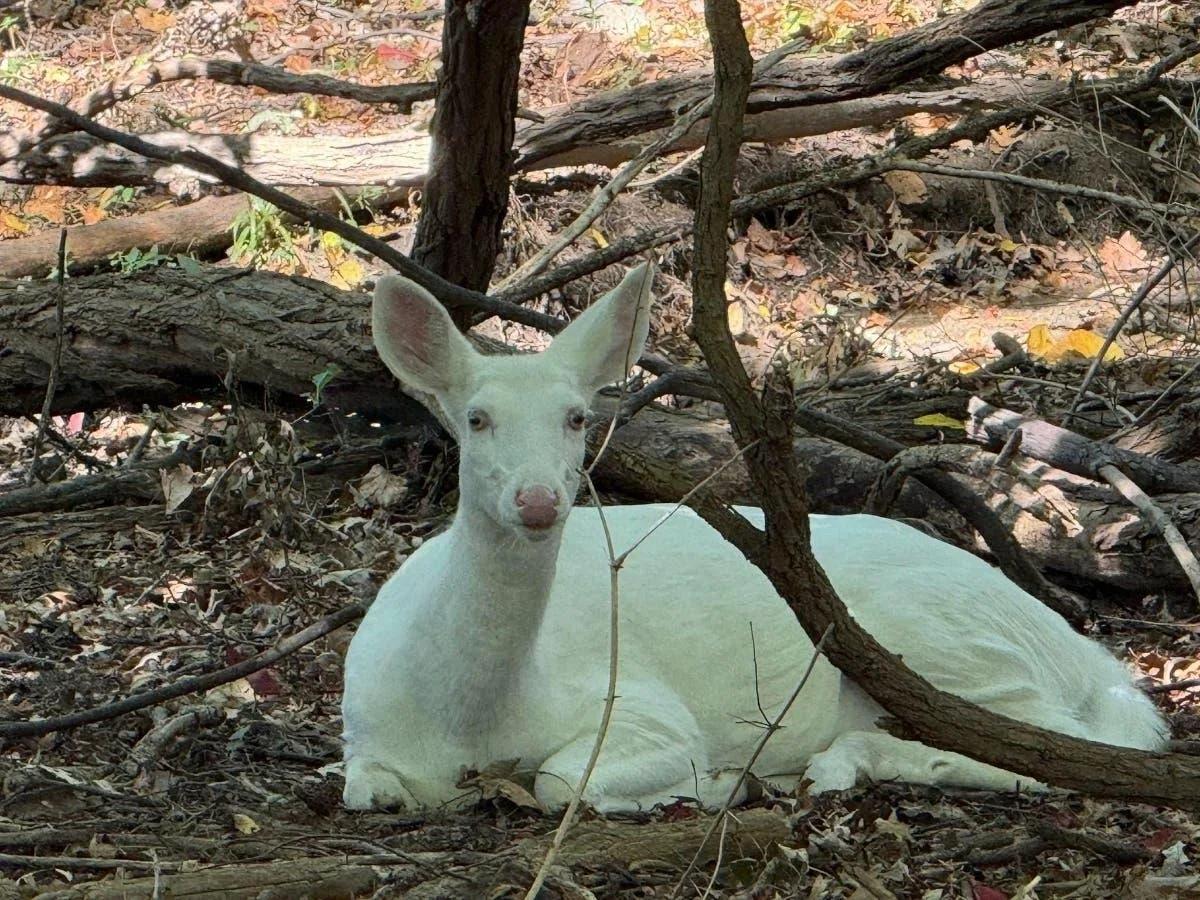
There’s something about a white deer that makes even the most experienced outdoorsman stop and look twice.
Against the browns, greens and grays of a typical whitetail’s habitat, an almost entirely white deer can look out of place. Seeing one may be a once-in-a-lifetime experience for some hunters. In parts of Wisconsin where white deer have appeared for generations, however, others know these unusual animals as familiar members of the local herd.
But spotting a white deer brings up a question every hunter should know the answer to before heading afield: Is it legal to shoot one?
State laws differ, and the distinction between a white coat and true albinism can matter.
Some states protect albino deer. Others extend that protection to deer with predominantly white coats. Still others allow hunters to harvest albino and piebald deer under the same regulations that apply to normally colored whitetails.
And to complicate matters, not every white deer is actually an albino.
Albino, Piebald or Leucistic? Know the Difference
Although the terms are frequently used interchangeably, albino, piebald and leucistic deer are not necessarily the same.
All three involve differences in pigmentation, but the biological characteristics can vary considerably.
True albino deer lack normal melanin pigmentation, the substance responsible for color in an animal’s hair, skin and eyes. These deer typically have completely white coats, pinkish eyes and pale noses and hooves.
Albinism is inherited and exceptionally rare in wild whitetail populations.
Piebald deer have a genetic condition that produces irregular patches of white and normally pigmented hair. Some are predominantly brown with scattered white patches, while others can appear nearly completely white. Piebald deer generally retain normal pigmentation in their eyes and portions of their skin.
The piebald condition can also be associated with physical abnormalities, including shortened legs, abnormal spinal curvature and jaw deformities. However, not every piebald deer exhibits these problems.
Leucistic deer have reduced or absent pigmentation in some or much of their coat but retain pigment in their eyes and other tissues. Unlike true albinos, they may have dark eyes and noses despite appearing completely white.

The distinction matters because wildlife regulations are not always written around these biological classifications. Some states regulate deer according to their visible coat color rather than the precise genetic condition responsible for it.
Wisconsin’s White Deer Protection: What the Law Actually Says
Wisconsin is among the states that specifically protect white deer from hunting.
Wisconsin Administrative Code NR 10.02(3) protects albino and white deer with entirely white hair, while allowing other-colored hair on the head, portions of the head and tarsal glands.
The rule also clarifies that white hair stained by dirt, blood or other materials is still considered white.
In other words, Wisconsin’s protection is not limited exclusively to genetically confirmed albinos.
A deer with an entirely white body and a darker nose or some coloration on its head may still qualify for protection. Hunters cannot assume a deer is legal simply because its eyes are dark or it doesn’t meet the textbook definition of albinism.
Wisconsin’s 2026–2027 hunting regulations reiterate that albino and all-white deer may not be harvested. Special written authorization from the Wisconsin Department of Natural Resources is required for otherwise prohibited possession or taking.

What About Piebald Deer?
This is where confusion often begins.
In Wisconsin, a deer with genuine brown patches on its body generally does not meet the state’s all-white definition and may be legally harvested during an appropriate open season, provided all other hunting requirements are satisfied.
However, that does not mean every deer with a darker nose, ears or face is automatically fair game.
The location of the coloration matters under Wisconsin’s regulations.
If a deer appears almost entirely white and its legal status isn’t clear, the sensible decision is to pass on the shot.
No deer is worth risking a wildlife violation because of uncertainty about its coat color.

White Deer Laws Change at the State Line
One of the biggest misconceptions surrounding white deer is that they are protected everywhere.
They aren’t.
In fact, neighboring states can have substantially different regulations governing these animals.
| State | White Deer Hunting Regulations |
|---|---|
| Wisconsin | Protects albino and qualifying all-white deer. |
| Iowa | Prohibits taking predominantly white wild white-tailed deer. |
| Michigan | Allows albino and piebald deer to be harvested under standard deer hunting regulations. |
| New Jersey | Does not provide special regulatory protection for albino or piebald deer. |
Sources: Wisconsin DNR, Iowa Code § 481A.124, Michigan DNR 2026 Deer Hunting Regulations and New Jersey Fish & Wildlife.
Iowa’s law is particularly interesting because it prohibits taking predominantly white whitetails, rather than restricting protection only to deer that are entirely white.
Michigan takes a different approach, allowing the harvest of albino and piebald deer as long as hunters comply with applicable seasons, licenses and other regulations.
These differences demonstrate why hunters cannot rely on regulations from neighboring states, assumptions based on previous hunting experiences or information circulating on social media.
The responsibility ultimately rests with the individual hunter to understand the rules wherever they hunt.
Are White Deer Really That Rare?
True albino whitetails are exceptionally unusual, although reliable nationwide estimates are difficult to establish.
According to New Jersey Fish & Wildlife, piebald deer typically make up less than 1% of deer populations. They are uncommon overall, though particular locations can have higher numbers.
That geographic clustering is important.
Because unusual coat coloration can be inherited, related deer in the same area may carry the genes responsible for it. Over multiple generations, a community might see several white or partially white deer even while the trait remains rare across the broader population.
That doesn’t necessarily mean white deer have been introduced, released from captivity or deliberately bred.
In many cases, unusual coloration is simply a naturally occurring inherited characteristic of the local population.
Does White Coloration Make a Deer Genetically Inferior?
Another question often raised when discussing white deer is whether protecting them interferes with healthy herd management.
The answer requires distinguishing between the different conditions.
True albinism is associated with a lack of pigmentation and can create challenges involving eyesight and sensitivity to sunlight. An animal’s conspicuous white coat may also reduce its ability to blend into its surroundings.
Piebald deer, meanwhile, can exhibit developmental abnormalities that go beyond coat color. Some experience skeletal deformities or other physical conditions that could affect survival.
But a white coat alone does not establish that an individual deer is unhealthy, incapable of reproducing or a threat to the herd.
Nor does protecting a small number of unusually colored deer necessarily mean wildlife managers are encouraging widespread propagation of a harmful trait.
White deer regulations can reflect historical traditions, public interest and the value communities place on these distinctive animals, rather than a biological determination that their genetics should be preserved.
Likewise, states that permit their harvest are not necessarily encouraging hunters to eliminate white deer from the population. In those jurisdictions, unusual coloration may simply not warrant a separate hunting restriction.
There is an important distinction between an uncommon genetic characteristic and a wildlife management problem.

Why Do Some States Protect White Deer?
Wildlife regulations are generally designed around biological considerations such as population size, habitat conditions, reproductive success and sustainable harvest.
But not every hunting law exists solely for population management.
White deer occupy an unusual place in the relationship between people and wildlife. Their distinctive appearance has inspired local traditions, wildlife photography, tourism and community interest.
In some communities, individual white deer become recognizable animals that residents follow and photograph over multiple seasons.
Protections for these animals reflect a combination of wildlife policy, legislative decisions and public values.
That sometimes creates disagreements within the hunting community.
Some hunters believe deer should be managed under the same regulations regardless of color. Others feel that the rarity and public interest surrounding white deer justify additional protection.
Both perspectives raise broader questions about how wildlife is managed and what people value about seeing certain animals in the wild.
Regardless of personal opinions about the regulations, hunters are required to follow the laws currently in effect.
What Happens if a Protected White Deer Is Shot?
The consequences depend on the state, the circumstances and the applicable wildlife laws.
In Wisconsin, taking a protected albino or all-white deer without authorization is prohibited. The situation may be investigated as a wildlife violation.
An intentional illegal harvest, an accidental shooting and the discovery of an animal killed by an unknown person are different situations that require different facts to establish what happened.
That’s why speculation about a hunter’s age, experience, intentions or equipment is rarely productive without evidence.
Hunters who believe they may have accidentally harvested a protected deer should contact the appropriate conservation authorities promptly, explain what happened and follow their instructions.
Attempting to conceal a violation can create additional problems.
Likewise, anyone who discovers a potentially illegally harvested animal should avoid unnecessarily disturbing the scene and notify conservation officers.
In Wisconsin, suspected hunting violations can be reported confidentially by calling or texting 1-800-TIP-WDNR (1-800-847-9367). The hotline operates 24 hours a day, seven days a week.
The Responsibility Starts Before the Hunt
For experienced hunters, reviewing regulations might seem routine. But hunting laws change, and rules governing unusual animals can be easily overlooked.
This makes education particularly important for new hunters and the adults who introduce them to the outdoors.
Learning to identify legal game involves more than recognizing species, antler characteristics or the difference between bucks and does.
Hunters should also understand protected wildlife classifications, legal shooting hours, license requirements, harvest authorization restrictions and any special rules governing the areas where they hunt.
When mentoring young hunters, it’s worth discussing unexpected encounters before they occur.
What should they do if an unusually colored deer appears? What if they aren’t certain whether the animal is legal? What if they make a mistake?
These conversations are just as much a part of responsible hunting education as marksmanship, shot placement and tracking.
A hunter who knows when not to shoot demonstrates a valuable skill.
A Rare Encounter Worth Understanding
White deer will always attract attention. Their appearance sets them apart from the countless normally colored whitetails moving through the same woods, fields and suburban neighborhoods.
But those encounters offer more than an opportunity for a memorable photograph.
They provide a chance to learn about genetics, wildlife management and the sometimes surprising differences between state hunting laws.
A deer that’s protected in Wisconsin might be legal to harvest just across the border in Michigan. An animal that appears albino might actually be piebald or leucistic. And a dark-eyed white deer might still qualify for protection under a law based on coat coloration.
For hunters, the most important lesson is simple: Know the regulations, identify your target with certainty and never make a shot when there is doubt about an animal’s legal status.
An unusual deer is a remarkable sight. Understanding the laws that govern it is part of being a responsible hunter.
Read More from Deer & Deer Hunting
- A Brief History of Hunting Regulation Pamphlets
- Mobile Hunting vs. Permanent Stands: Which Is Better for Whitetails?
- ATV Food Plot Implements: How to Do More With Less Equipment

Related Articles
300,000 Arrows: A Lifetime of Bowhunting Practice
After four decades of practice, Bob Robb estimates he has shot more than 300,000 arrows. He looks back on the discipline, memories and physical toll of a lifetime behind the bow.
Read More about 300,000 Arrows: A Lifetime of Bowhunting Practice
Real-World Big Bucks: How Age Changes Whitetail Antlers
How much can a buck change from a yearling to full maturity? Charles Alsheimer draws on decades of observing known-age whitetails to explore three different antler-growth patterns.
Read More about Real-World Big Bucks: How Age Changes Whitetail Antlers
American Hero: Army Veteran Tags a 203-Inch Oklahoma Giant
Brandon Neitzel had years of trail-camera history with a giant Oklahoma whitetail. One cell-camera photo convinced him to make his move, leading to a 7-yard shot at the 203-inch buck.
Read More about American Hero: Army Veteran Tags a 203-Inch Oklahoma Giant