
Deer Browse: Black Medic
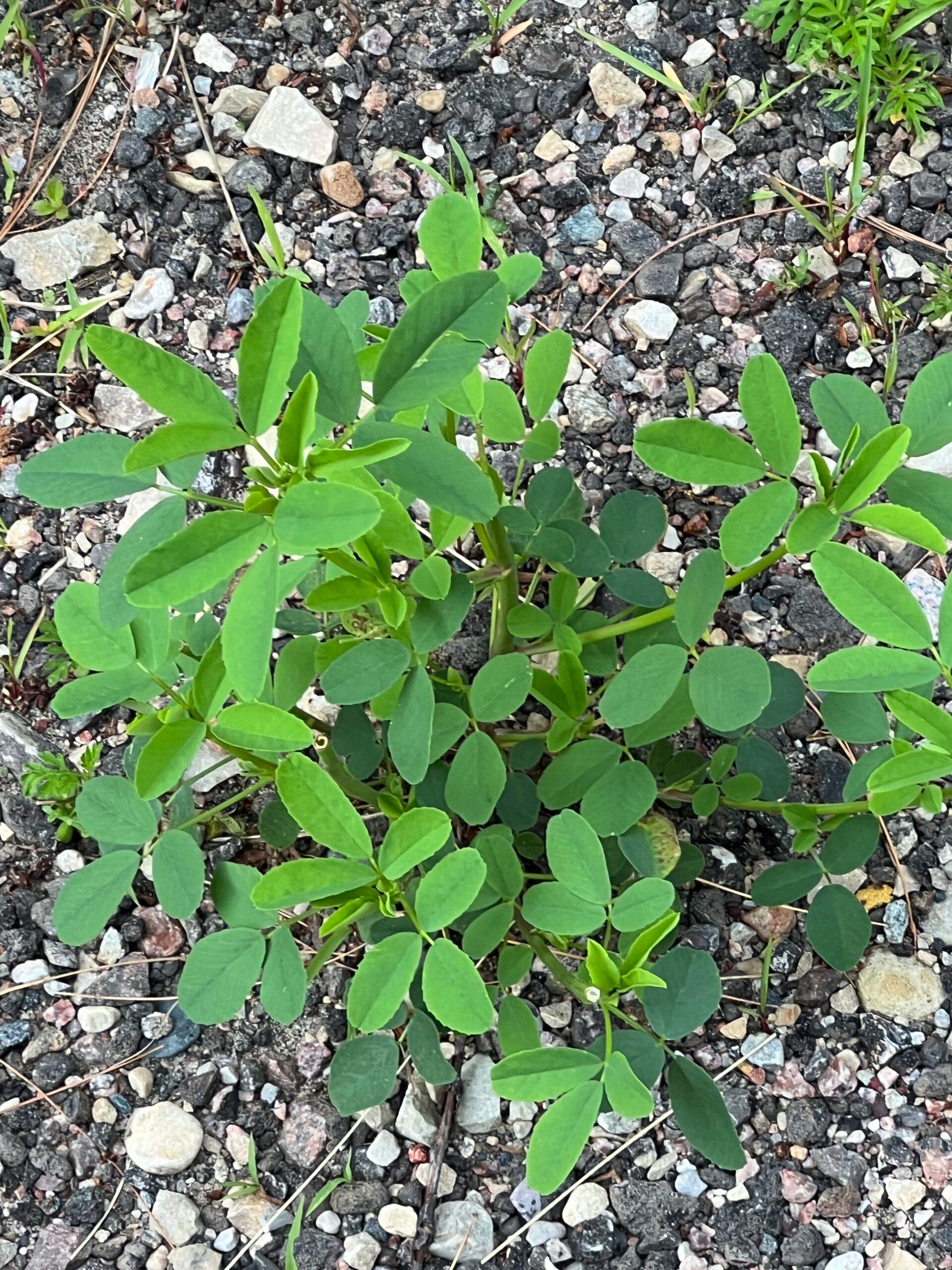
If you’re a public land deer hunter or simply want to better understand the native ground you hunt, it’s wise to learn about plants deer prefer. So much attention is given to food plots these days, but it’s the native and non-native plant families that can put you on deer faster in situations where good, old-fashioned scouting is required.
Black medic — often called “black clover” — is one such plant.
The photos accompanying this blog post were taken while I was walking a woodside ditch yesterday afternoon. The stretch of road is exactly 2 miles, and it winds through prime deer country. Much to my surprise, few of the other native forages were nipped by deer (including white clover, red clover, dandelion and wild raspberry). The same could not be said of the many colonies of black medic growing in the gravel and ditch areas. Nearly EVERY plant was nipped by deer, especially the leaders.

Black medic (Medicago lupulina) is a common, prostrate broadleaf weed that is found throughout the US and Southern Canada. Native to Europe and temperate Asia, this member of the legume family (Fabaceae) has a few other common names including yellow trefoil, black clover and hop medic. (source)
Also spelled “medic” or “meddick”, the plant is known by a number of alternate names, including nonesuch, black nonesuch, black medic clover, hop clover, hop medic, black clover, black hay, blackweed, English trefoil, hop trefoil, and yellow trefoil. (source)
Black medick may be confused with other plants that have three leaflets and small yellow flowers, such as hop trefoil (Trifolium campestre), large hop trefoil (T. aureum), lesser hop trefoil (T. dubium), and yellow woodsorrel (Oxalis stricta).
Not surprising, the thicker colonies of black medic were accompanied by well-worn deer trails heading back into the adjacent wooded ridges and swamp bottoms. Granted, the browsing activity will be seasonal, but the trail heads would be a key starting point if I were scouting these areas for early archery action. Similar scouting plans have helped me immensely in the past when looking for early season bowhunting spots. For example, I’ve used past intel on black locust locations, winged sumac and even wild grapes to find inside edges. Those edges have helped reveal secondary trails leading to secluded bedding areas. Bedding areas reveal staging areas. It all goes hand in hand.

Related Articles
Deer Carcass Cleanup: What Wildlife Eats the Remains?
A harvested deer feeds more than the hunter’s family. From bald eagles and crows to coyotes and raccoons, discover the surprising variety of wildlife that benefits from deer remains.
Read More about Deer Carcass Cleanup: What Wildlife Eats the Remains?
Take Them With You
More than 50 years later, Daniel E. Schmidt still remembers the rabbit hunt his older brothers let him join — and the lesson that memory carries for hunters today.
Read More about Take Them With You
Sorry, But It’s Not a Bolt
It is time. Time to stop the bickering and childish rhetoric over a simple piece of equipment in the deer-hunting world. I’m specifically talking about the term “bolt” when referring to a crossbow projectile. The term was cute — and technically accurate — when it was coined generations ago. But it has long outlived its […]
Read More about Sorry, But It’s Not a Bolt