
How Whitetail Bucks Grow Weird Nontypical Antlers
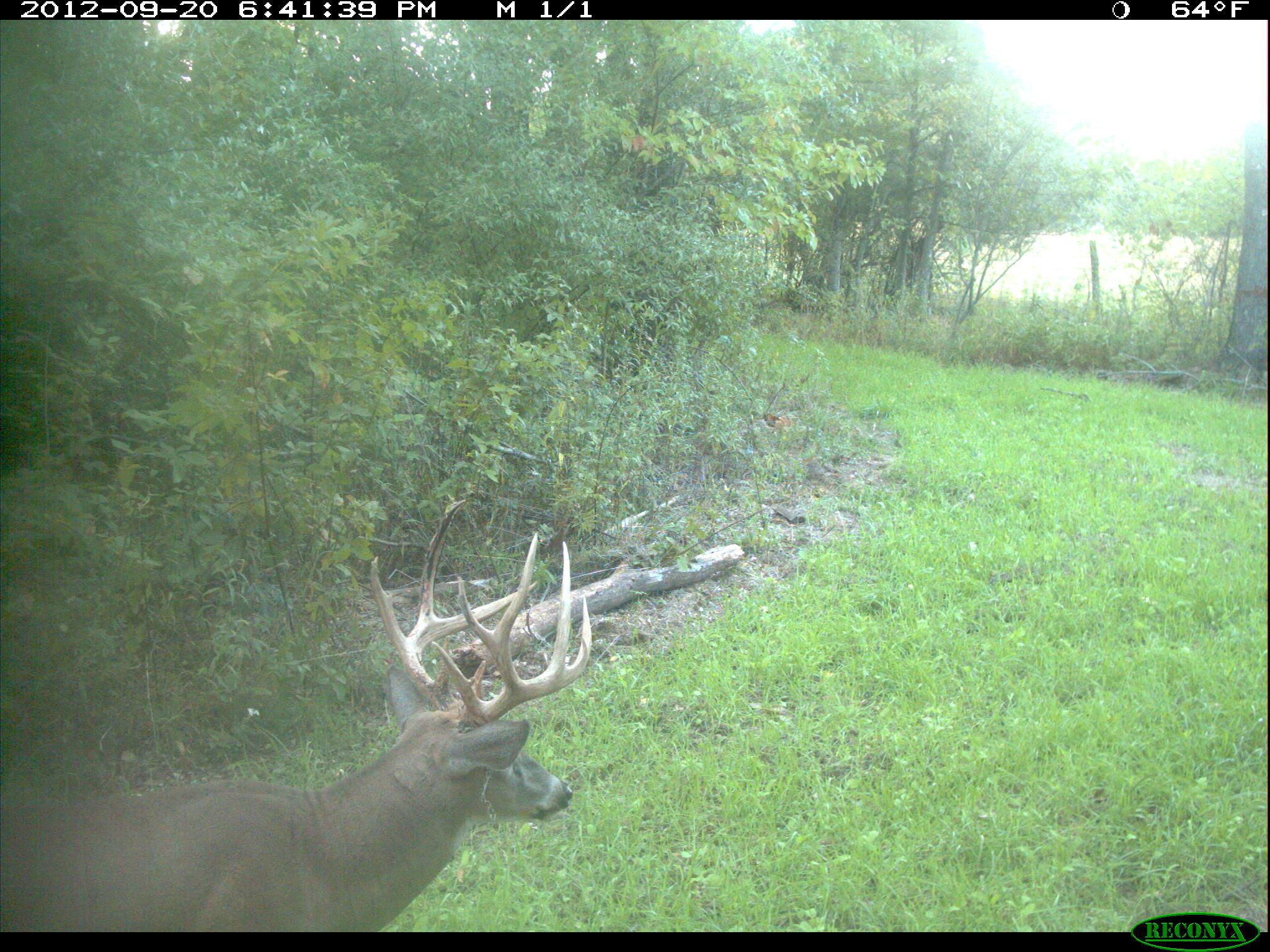

While most white-tailed bucks carry antlers that are somewhat symmetrical, an injury to one of the deer’s extremities can drastically throw them out of balance.
Antlers are an extraordinary creation of nature. But hunters are often so infatuated with these rapidly growing extremities they forget that they are part of a greater biological occurrence — the white-tailed deer. Don’t get me wrong, I love antlers. I’m fascinated with them — from the time a fresh shed scab heals over the pedicle, through the entire growth process, to the moment when they detach and return back to the earth. But it’s important to understand that they are a function of the anatomy of a white-tailed buck, and as such, controlled by the entire body. And, an injury to the deer’s body can have a negative effect on antler growth.
An interesting occurrence, often referred to as the “contralateral effect,” is antler deformation on just one side. If you have hunted long enough you have likely seen this, where a normally symmetrical rack is far from that. Obviously, some cases are more severe than others, such as a perfect 5 points on one side and a long “cowhorn” spike on the other. While this phenomena is somewhat of a mystery in the scientific community, there appears to be a strong correlation between an injury and this antler deformity.
Essentially, an injury to the rear area (typically a leg) of a buck, causes an antler abnormality on its opposite side. Research and observations suggest that the more severe the injury, the greater the antler is affected.
WHY DOES IT OCCUR?
Texas researchers during the 1970s observed wild deer with antler abnormalities on one side. But they also experimented with captive bucks to determine if the contralateral effect could be an actual and consistent occurrence. They amputated a rear leg from six captive white-tailed bucks, and as a result all six bucks developed deformed antlers on the side opposite the amputation. But the question remained: Why does this occur? In his book, “Deer Antlers: Regeneration, Function and Evolution,” Richard J. Goss offers a potential reason for the contralateral effect. He describes it as a compensatory healing response. Essentially the buck’s body utilizes resources from the “healthy side” of the body to heal the injured area.
But why isn’t the injured side depleted of resources first, and why isn’t that antler deformed? To muddy the waters even further, Deer & Deer Hunting’s long-time contributor John Ozoga stated that in some bucks the contralateral effect can be delayed several years, at which point many of the injuries could be healed beyond recognition to the naked eye.
The contralateral effect is one of those mysteries in the whitetail world that has not been fully explained. What we do know is that it occurs so frequently that the cause and effect can be assumed to be valid. It’s the “why” that’s still unclear.
— Jeremy Flinn is a professional deer biologist living in Pennsylvania. An avid bowhunter and Deer & Deer Hunting contributor, he has provided valuable information to hunters and landowners for more than a decade.
Related Articles

Armed Poachers in Florida Could Lose Guns
Florida Attorney General James Uthmeier has announced legislation that would significantly increase penalties for poachers who discharge firearms near homes, occupied buildings, people, or critical infrastructure while illegally taking wildlife.
Read More about Armed Poachers in Florida Could Lose Guns
New At-Home Lyme Test Could Help Outdoorsmen Make Quicker Decisions
Called LymeAlert, the at-home test is designed to determine whether a removed tick carries the bacteria responsible for Lyme disease.
Read More about New At-Home Lyme Test Could Help Outdoorsmen Make Quicker Decisions
Man Charged with 50 Violations After Months-Long Poaching Investigation
Michigan man charged with 50 firearm and wildlife violations after allegedly shining and shooting deer from his vehicle for months.
Read More about Man Charged with 50 Violations After Months-Long Poaching Investigation