
Mysterious Gray Wolf Far South of Natural Home Range Surprises Hunter, Officials
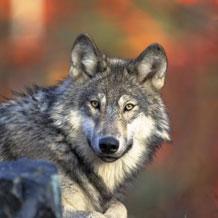
Federal officials recently confirmed that an animal killed by a hunter near Munfordville in Hart County, Kentucky, on March 16 is a gray wolf.
 A DNA analysis performed by the U.S. Department of Agriculture’s National Wildlife Research Center in Colorado determined the 73-pound animal was a federally endangered gray wolf with a genetic makeup resembling wolves native to the Great Lakes Region. The U.S. Fish and Wildlife Service Forensics Laboratory in Oregon confirmed the finding.
How the wolf found its way to a Munfordville hay ridge at daybreak in March remains a mystery. Wolves have been gone from the state since the mid-1800s.
Great Lakes Region wolf biologists said the animal’s dental characteristics – a large amount of plaque on its teeth – suggest it may have spent some time in captivity. A largely carnivorous diet requiring the crushing of bone as they eat produces much less plaque on the teeth of wild wolves.
Hart County resident James Troyer took the animal with a shot from 100 yards away while predator hunting on his family’s farm. Troyer, 31, said he had taken a coyote off the property just two weeks earlier.
But when he approached the downed animal he noticed it was much larger. “I was like – wow – that thing was big!” he recalled. “It looked like a wolf, but who is going to believe I shot a wolf?”
Because a free-ranging wolf has not been seen in the state for more than a century, biologists were skeptical at first. However, wildlife officials were aware that a few radio-collared northern wolves have wandered as far south as Missouri in the past decade.
Wolves resemble coyotes, except they are much larger. From a distance, the size difference is difficult to determine.
Troyer convinced Kevin Raymond, a wildlife biologist for the Kentucky Department of Fish and Wildlife Resources, to look at the animal. Once Raymond saw the animal was twice the size of a coyote, he contacted furbearer biologist Laura Patton, who submitted samples to federal officials for DNA testing.
Because state and federal laws prohibit the possession, importation into Kentucky or hunting of gray wolves, federal officials took possession of the pelt. Since this is the first free-ranging gray wolf documented in Kentucky’s modern history, federal or state charges are not expected because there were no prior biological expectations for any hunter to encounter a wolf.
Source: Kentucky Department of Fish and Wildlife Resources
Related Articles

Armed Poachers in Florida Could Lose Guns
Florida Attorney General James Uthmeier has announced legislation that would significantly increase penalties for poachers who discharge firearms near homes, occupied buildings, people, or critical infrastructure while illegally taking wildlife.
Read More about Armed Poachers in Florida Could Lose Guns
New At-Home Lyme Test Could Help Outdoorsmen Make Quicker Decisions
Called LymeAlert, the at-home test is designed to determine whether a removed tick carries the bacteria responsible for Lyme disease.
Read More about New At-Home Lyme Test Could Help Outdoorsmen Make Quicker Decisions
Man Charged with 50 Violations After Months-Long Poaching Investigation
Michigan man charged with 50 firearm and wildlife violations after allegedly shining and shooting deer from his vehicle for months.
Read More about Man Charged with 50 Violations After Months-Long Poaching Investigation