
Public Land Windfall Whitetail Haunts
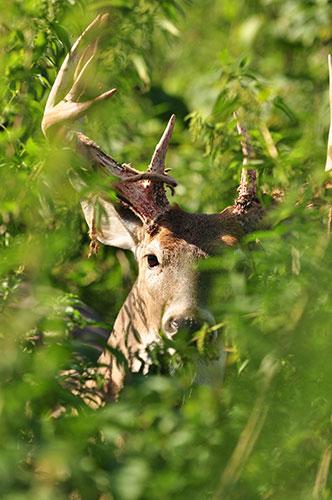
It’s June and summer has arrived — even if the weather has agreed or not. Something that many of us can agree on is the unpredictable and extreme weather that parts of the country have experienced during the last several summers. Dangerously high winds, severe thunderstorms and tornadoes have caused massive amounts of damage during the recent past. While the effects of many of those storms have devastated buildings, businesses and livelihoods, they have also been a boon to wildlife — especially whitetails.

More and more we are learning about the benefits of healthy, diversely aged forests created through sound timber management practices. Select-cutting, clear-cutting and hinge-cutting all have their places and can do wonders for the health of a forest and the amount of forage and browse available to the local whitetails. To make a long story short, as trees and brush are cleared out and the upper canopy opened, more sunlight reaches the ground and fresh, succulent new growth bursts forth to provide ample natural food within easy reach of every deer in the area. Forest fires often have a similar effect, and many Western hunters seek out past burned areas in pursuit of elk, mule deer and others for these same reasons.
Timber management on private land is one thing, but active logging on public hunting land — especially federal land like national forests — is woefully behind schedule and has been for many years due to a number of issues that we don’t have the space to discuss in this article. In big-woods habitats with little or no agriculture, and inconsistent or nonexistent acorn production, this can equal low deer numbers caused by large regions of even-aged stands of mature and over-mature timber that produce little forage and browse for white-tailed deer and other wildlife. So, recent and active timber harvests are very beneficial to whitetails (and hunters) in public-land, big-woods habitats due to the increase in natural food that they produce.

That’s where the extreme weather comes into play. When there’s no logging (or fires) to create new forage and browse, Mother Nature can provide something almost as good. When high winds knock down branches and trees, or literally rip them right out of the ground, in areas of a half-acre or more, BOOM! There’s your natural select-cut or clear-cut on public land. The leaves and buds from the once out-of-reach treetops are now instant high-quality food sources. Then saplings, weeds and bushes will start growing and provide exceptional deer food for several years until it grows too tall for them to reach. Plus, the twisted-up tangles of downed trees and branches, and the high-stem-count new growth all create incredible deer bedding and security cover for years until they all mature and the cycle eventually starts again.
How do we find these storm-damage honey holes? Check back for part two of the series and a few tips on discovering where these hidden hot spots are located in your public-land hunting area.
BaseMap Hunting GPS Subscription Offer
3 Valuable Public Land Deer Hunting Tips

Related Articles

Simple, Quick Bow-Shooting Tip
Decent shot opportunities are few and far between when bowhunting on pressured public land, and this easy tip will help you make the shot when the pressure is on.
Read More about Simple, Quick Bow-Shooting Tip
Anti-Hunting, Anti-Trapping Groups Making Moves
The new year brings renewed optimism and energy as people refocus on their goals and dreams for the future. Anti-trapping and anti-hunting groups are no different, and they have started out 2022 with a jump.
Read More about Anti-Hunting, Anti-Trapping Groups Making Moves
The Secret Layer of Warmth in the Woods
Getting cold and deer hunting go together like peanut butter and jelly. But it doesn’t have to be that way. There are key ingredients for warmth in the woods, including one solid game changer.
Read More about The Secret Layer of Warmth in the Woods