
Pythons a Threat to Deer Hunting? Updated
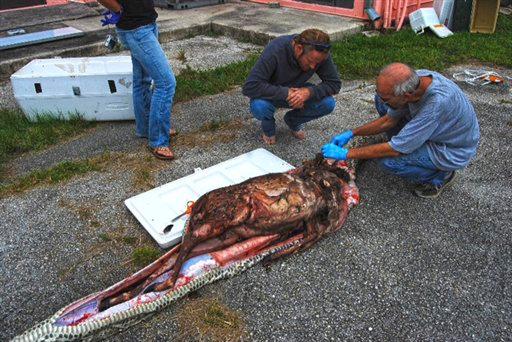
Updated: Think pythons can’t kill an adult whitetail? Check out THIS exclusive gallery provided by Everglades biologist Skip Snow.
Also, I contacted noted herpetoligst (snake and amphibian scientist) Gary Casper, to get his take on the possibility of Burmese pythons having an actual detrimental effect on large mammal populations.
Casper said that if python numbers are exploding, it’s possible they could have real impacts on mammal populations, and be pretty effective at finding newborn fawns.
“When they can, they eat a lot and grow fast,” Casper said. “I have no reason to doubt Dorcas’s conclusions, but haven’t really studied the issue or looked for corroborating evidence.”
Casper said most of these invasive species increase rapidly after an initial long period of low numbers, then explode with very negative impacts on everything around them, then crash and come to some sort of equilibrium.
“So we may be seeing an early phase, and it’s already too late to do anything about it,” Casper said. “Watch and learn.”
Are pythons wiping out Everglades deer? They just might be. Could they cause a major population decline across the South? It’s possible according to some researchers.
 The newswires were abuzz yesterday with an NPR story about invasive Burmese pythons exacting a heavy toll on Everglades’ wildlife populations. If you’re a deer hunter, you should take note of this situation, because according to the lead researchers, raccoons, rabbits and opossums aren’t the only Florida mammals in serious danger.
The story quotes Davidson College biologist Michael Dorcas in saying that his wildlife surveys have shown a 94 percent decrease in white-tailed deer observation, in addition to a 99.3 percent decrease in raccoons, 98.9 percent in opossums and 87.5 percent in bobcats.
Now, to be fair, the article points out that Dorcas’ numbers are based solely on road counts, and do not indicate a comprehensive census. Yet road surveys are an accepted scientific method of tracking population trends. Plus, researchers points to several documented cases of white-tailed deer predation by pythons. So although the study numbers might be slightly anecdotal, the trend certainly seems real.

Even more worrisome for hunters could be the fact that the U.S. Fish and Wildlife Service considers the pythons a threat for a much larger area. According to the Service’s research, pythons could live almost anywhere in the Southern U.S.
Many hunters never expected wild hog populations to harm deer hunting in their neck of the woods. Now, that seems to be the case in many areas. Could pythons be the next invader to hurt deer hunting in the South?
What do you think?
Related Articles


DNR Updates Hunters On Sweeping Changes
In July, Wisconsin Governor Scott Walker’s office released an independent report by “Deer Czar” Dr. James Kroll. The report brought about plenty of criticism from within the state (See D&DH Editor Dan Schmidt’s thoughts HERE), but regardless it called for some major changes in deer management in the state. The following is the DNR’s update […]
Read More about DNR Updates Hunters On Sweeping Changes
Shooting Hours App: Great Idea, But Shouldn’t It Be Free?
The Wisconsin Department of Natural Resources recently announced a new app for Android phones (iPhone coming soon?) that will allow hunters to check the exact time for shooting hours in their hunting location. No more confusing maps or forgotten regulations booklets and wondering if that buck or duck coming into your spot is fair game. […]
Read More about Shooting Hours App: Great Idea, But Shouldn’t It Be Free?