
Questions & Answers About Doe Harvests
harvest from my property each year?”
That’s a great question, to which there are no easy answers. However, through some
of the research provided by our longtime contributing editors, we have formulated
some guidelines that are just that … guidelines for the art of proactive deer management.
Before setting an antlerless harvest goal on your property, you need to know what
type of habitat you have. Is it prolific, mediocre or poor? What type of deer density
do you already have? These questions can really only be answered accurately by your
local state-employed deer biologist.
If you own or manage more than 500 acres, I would strongly suggest contacting someone
from your state agency. Ask them to visit you on their next tour through your area
and survey your property. Most guys will be happy to do it, especially if it’s at
their discretion and if it’s going to help with the area’s overall deer management
program. However, if you are like most D&DH readers and own/manage less than 250
acres, here is a rough guideline of how to estimate and then formulate your own plan.
If your land is prolific (50+ deer per square mile, which is common nowadays–too
high but common) and the habitat is excellent, a good range to shoot for is a harvest
of two or three adult does per 100 acres. You could add one or two doe fawns to the
harvest and not really effect things too much. If you take out more adult does, you
run the risk of severely affecting the local herd dynamics. It’s important to remember
that adult does have smaller home ranges than bucks, and the fact that does live in
maternally related groups with overlapping home ranges.
Is it possible to “overshoot” a doe herd? Yes. However, to get a good handle on this
potential problem, you need to have a firm grasp on what your neighbors are doing.
If they aren’t shooting does, you might have to ramp up your efforts. If they are
shooting does (and the habitat is at or under density goals), err on the side of taking
out one adult doe per 100 acres and two or three doe fawns.
What about buck fawns? Don’t worry about it. You are bound to have some in your harvest.
The national average is about 22 percent in the annual harvest. No big deal, and absolutely
no effect on buck populations in areas with high deer densities. If your goal is to
produce a healthier herd and better buck population, a few buck fawns in the harvest
is the collateral damage that’s necessary for achieving the end result. To help prevent
buck fawns from harvest, use a pair of quality binoculars when hunting. However, don’t
get bent out of shape if mistakes are made. Those buck fawns will be long gone from
your property through dispersal by the time their 18 months old anyway.
We will have more on these topics in the coming issues of D&DH.
Dan Schmidt, Editor
Related Articles

Armed Poachers in Florida Could Lose Guns
Florida Attorney General James Uthmeier has announced legislation that would significantly increase penalties for poachers who discharge firearms near homes, occupied buildings, people, or critical infrastructure while illegally taking wildlife.
Read More about Armed Poachers in Florida Could Lose Guns
New At-Home Lyme Test Could Help Outdoorsmen Make Quicker Decisions
Called LymeAlert, the at-home test is designed to determine whether a removed tick carries the bacteria responsible for Lyme disease.
Read More about New At-Home Lyme Test Could Help Outdoorsmen Make Quicker Decisions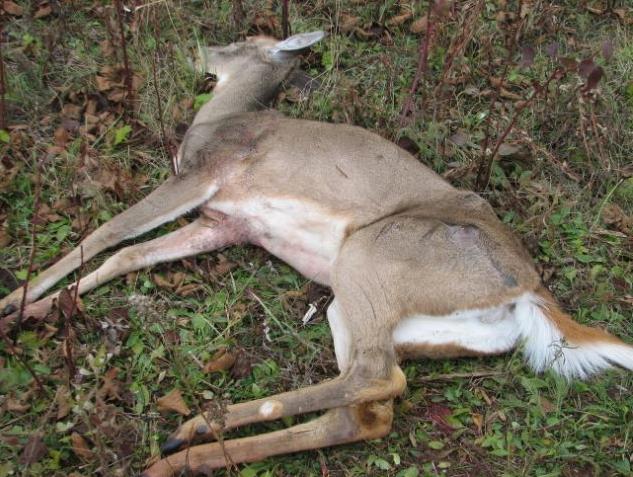
Man Charged with 50 Violations After Months-Long Poaching Investigation
Michigan man charged with 50 firearm and wildlife violations after allegedly shining and shooting deer from his vehicle for months.
Read More about Man Charged with 50 Violations After Months-Long Poaching Investigation