
Springtime Struggles for White-tailed Deer
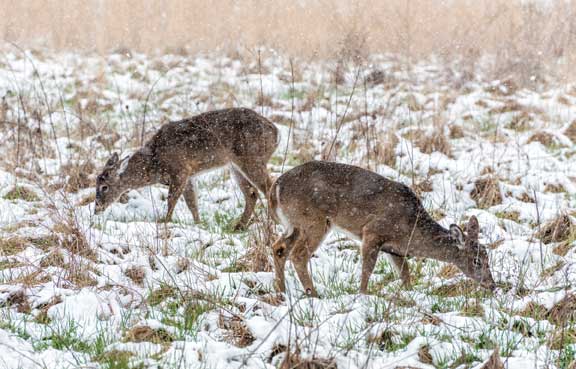

Early spring, not winter, might be the most challenging time for winter-worn whitetails.
No matter the region, winter is an extremely stressful time for whitetails — even in the South. Although Southern deer might not be dealing with blizzard conditions or sub-freezing temperatures, diminished resources can put a lot of stress on the herd. But while most of us think of January or February as being the most difficult months for deer — March is often the most stressful time of year.
That might seem counter intuitive, because many areas are greening up, but research shows that whitetails essentially hit “rock bottom” come March — after enduring the breeding season, several months of extreme weather conditions and diminished food sources. March, basically, is the end of a long, hard run in the whitetail’s annual life cycle.
Not every March is the same, of course. When warmer spring weather arrives earlier than normal, deer might be bailed out of a tough situation. However, for most areas, food is scarce throughout at least the early part of March, which not only limits buck recovery and the prior year’s fawn growth, but makes it a struggle for does who are entering mid- to late-gestation.
Winter Feeding Programs
Many Northern states’ wildlife agencies create winter feed areas more often in March than during any other month. Though it can be debated whether they do more harm than good in some cases — especially in areas with CWD — it is often the lesser of two evils, with deer extremely vulnerable to winter mortality at this time of year.
Annual food plots have relatively little effect during the harsh late winter. Rather, perennial food plots and native browse will carry deer through this most difficult period. However, this is not something you can quickly react to, such as winter feeding, it must be properly planned out. Thus, it’s important to have a habitat management plan, which includes timber cuts, prescribed burns and rotational food plots that contain both annual and perennial plant species.
In order to create a full, year-round whitetail management plan you must look at every annual aspect, but pay closest attention to the most stressful periods of time including summer (fawning and antler growth) and late winter (rut recovery and limited resources). By considering these most limiting factors, you can create and maintain a healthy deer herd.
Related Articles

Armed Poachers in Florida Could Lose Guns
Florida Attorney General James Uthmeier has announced legislation that would significantly increase penalties for poachers who discharge firearms near homes, occupied buildings, people, or critical infrastructure while illegally taking wildlife.
Read More about Armed Poachers in Florida Could Lose Guns
New At-Home Lyme Test Could Help Outdoorsmen Make Quicker Decisions
Called LymeAlert, the at-home test is designed to determine whether a removed tick carries the bacteria responsible for Lyme disease.
Read More about New At-Home Lyme Test Could Help Outdoorsmen Make Quicker Decisions
Man Charged with 50 Violations After Months-Long Poaching Investigation
Michigan man charged with 50 firearm and wildlife violations after allegedly shining and shooting deer from his vehicle for months.
Read More about Man Charged with 50 Violations After Months-Long Poaching Investigation