
Tests Reveal Fatal Deer Disease Has Doubled Despite Efforts
Despite chronic wasting disease having been around for more than four decades, wildlife biologists still haven’t been able to figure out how to stop or slow the spread of the fatal deer disease.
Now, it appears to have doubled in the percentage of deer in one state where officials are trying to take their next steps in the fight.
Wisconsin Department of Natural Resources officials reported Feb. 25 that testing of deer in Dane and Iowa counties show about 25 percent of male deer have CWD. The testing was conducted in the DNR’s management zone for the disease, where it was found in 2002.
The disease is believed to be fatal to deer that contract it, and that’s done through social contact and/or contaminated soils. It’s a neurological disease. The only way to test for it is to examine lymph nodes from dead animals. CWD was first discovered in 1967 in Fort Collins, Col., in captive mule deer and has since been discovered in two dozen other states and Canadian provinces.
Wisconsin DNR’s testing is conducted annually within the management zone. Officials said they estimated between 8 percent and 10 percent of deer within the zone in 2002 had the disease. State officials have tried public education, the containment or management zone, and other methods in an effort to slow the spread of the disease. After more than a decade, the results show a doubled increase, by percentage.
Illinois DNR officials use sharpshooters to kill deer in their 12-county CWD zone and has just a 1 percent prevalence rate in that zone. Different management strategies, sample/testing numbers, deer population density, different attitudes of hunters and the public … while one strategy may sound great and the other questionable, management isn’t always cookie-cutter.
But Wisconsin’s DNR officials see the obvious trend within their management zone. More deer with CWD, and specifically more adult bucks than does or yearlings with it. Why? They’re not sure.
Tamara Ryan, chief of wildlife health at the DNR, told the Milwaukee Journal-Sentinel that the south-central zone has too high of a carrying capacity. said it’s difficult to say what will happen in the coming years. But she noted the region has more deer than its carrying capacity and the disease spreads via contact between deer.
Read the full story here in the Journal-Sentinel.
Related Articles

Armed Poachers in Florida Could Lose Guns
Florida Attorney General James Uthmeier has announced legislation that would significantly increase penalties for poachers who discharge firearms near homes, occupied buildings, people, or critical infrastructure while illegally taking wildlife.
Read More about Armed Poachers in Florida Could Lose Guns
New At-Home Lyme Test Could Help Outdoorsmen Make Quicker Decisions
Called LymeAlert, the at-home test is designed to determine whether a removed tick carries the bacteria responsible for Lyme disease.
Read More about New At-Home Lyme Test Could Help Outdoorsmen Make Quicker Decisions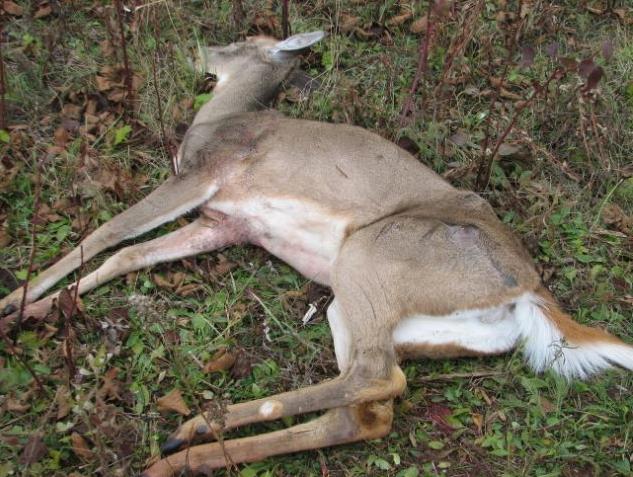
Man Charged with 50 Violations After Months-Long Poaching Investigation
Michigan man charged with 50 firearm and wildlife violations after allegedly shining and shooting deer from his vehicle for months.
Read More about Man Charged with 50 Violations After Months-Long Poaching Investigation