
That’s Not Blood on Your Plate!
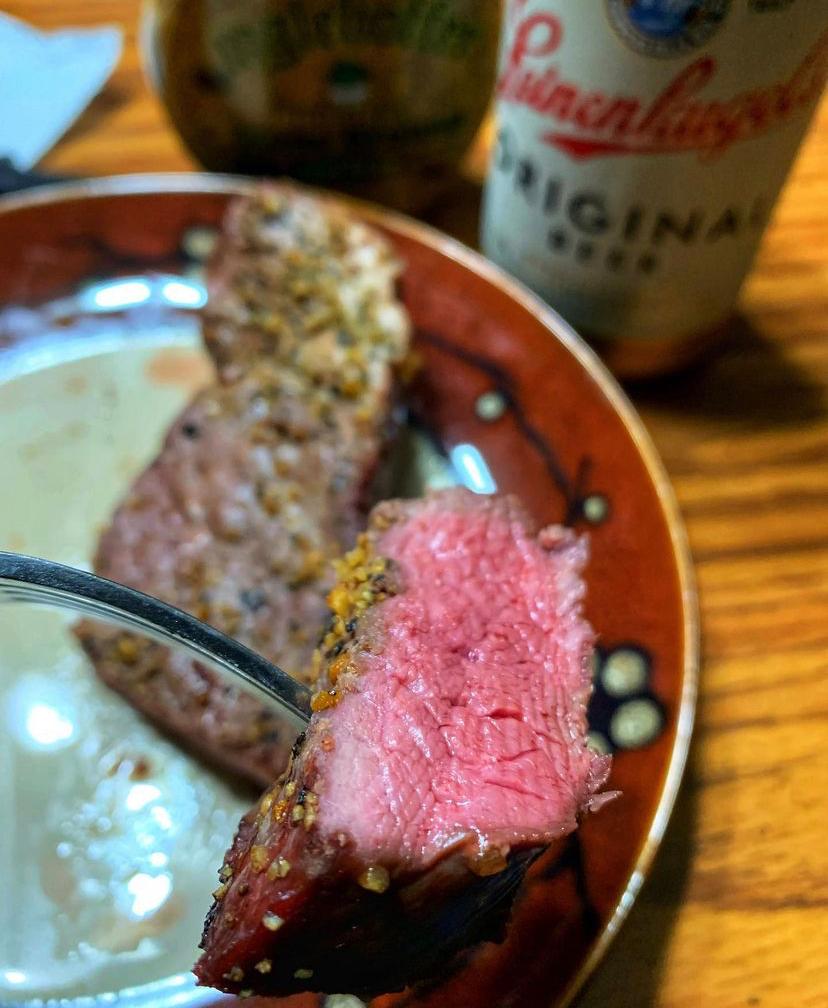
Most folks who love a good steak (beef, venison or otherwise) agree that the best way to eat it is seared over open coals and slightly pink in the middle. There’s a good portion of folks who like it “more alive” than that — stating that “bloody” is the best.
However, herein lies the question: Is that really blood on my plate from my steak? Does blood really seep out of meat while it’s cooking?
The short answer is no.

According to research published by Michigan State University Meat Lab, the red liquid on the plate when eating a rare steak is not blood. It is a protein called myoglobin, which distributes oxygen to the muscles.
The Medina County Farm Bureau adds, “All blood has been removed from the carcass during the slaughtering process. There is no such thing as a bloody steak.”
Myoglobin in meat works in similar fashion as hemoglobin. Its job is to transport oxygen through the muscles. It appears red (blood-like) because it contains iron that causes it to turn red when exposed to oxygen. That is the same reason why meat is red.
So, the next time you grill up a backstrap, just cook it to your liking and don’t worry about “eating blood,” because … you’re not!
Related Articles

Deer Carcass Cleanup: What Wildlife Eats the Remains?
A harvested deer feeds more than the hunter’s family. From bald eagles and crows to coyotes and raccoons, discover the surprising variety of wildlife that benefits from deer remains.
Read More about Deer Carcass Cleanup: What Wildlife Eats the Remains?
Take Them With You
More than 50 years later, Daniel E. Schmidt still remembers the rabbit hunt his older brothers let him join — and the lesson that memory carries for hunters today.
Read More about Take Them With You
Sorry, But It’s Not a Bolt
It is time. Time to stop the bickering and childish rhetoric over a simple piece of equipment in the deer-hunting world. I’m specifically talking about the term “bolt” when referring to a crossbow projectile. The term was cute — and technically accurate — when it was coined generations ago. But it has long outlived its […]
Read More about Sorry, But It’s Not a Bolt