
Tiny, Antlerless Deer Roamed South Dakota 32 Million Years Ago
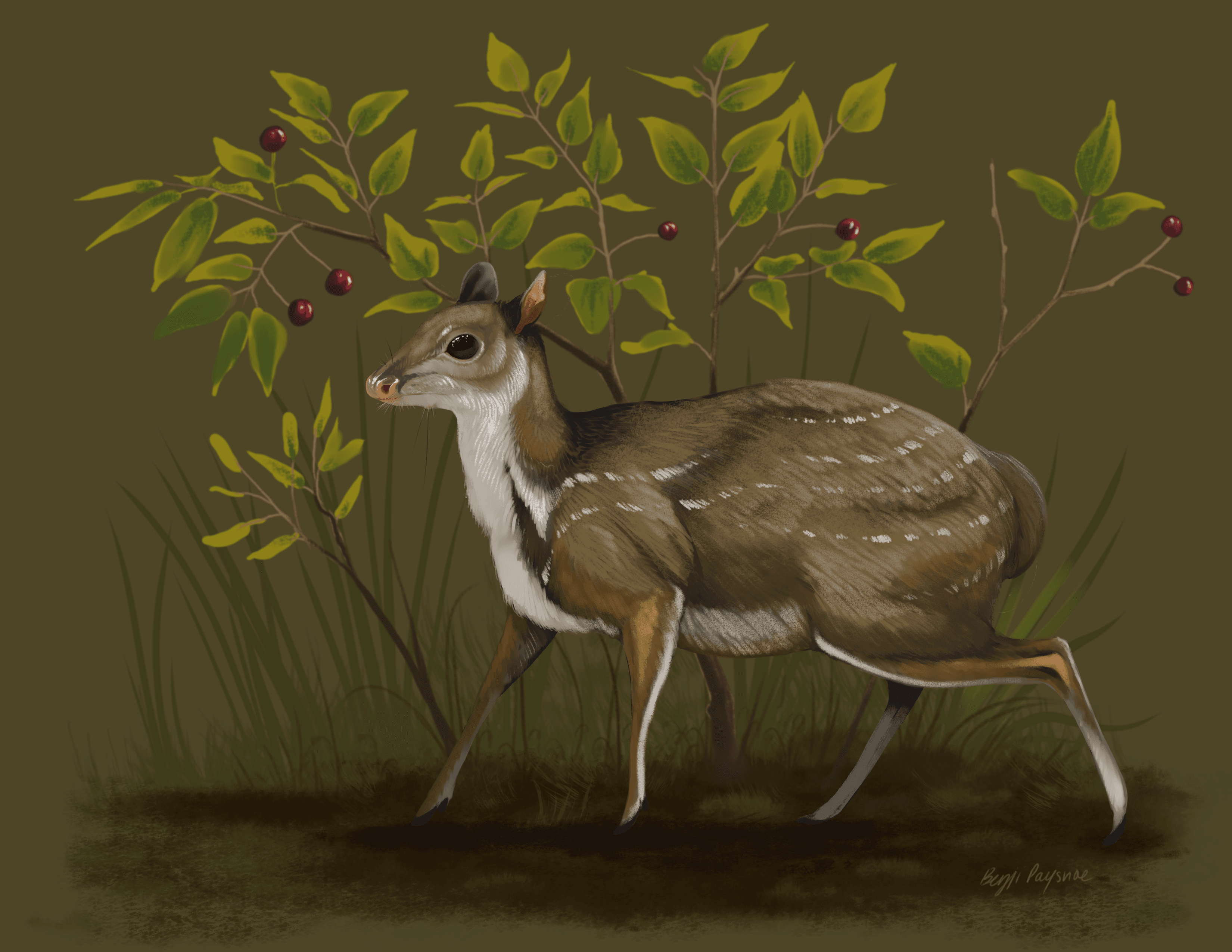
A research team from Badlands National Park, the American Museum of Natural History and California State Polytechnic University discovered a new genus of tiny, antlerless deer that roamed South Dakota approximately 32 million years ago. The new deer is called Santuccimeryx, meaning “Santucci’s ruminant,” named after Vincent L. Santucci, the senior paleontologist and paleontology program coordinator in the Geologic Resources Division of the National Park Service, “to honor his history with and advocacy for the paleontology program at Badlands National Park,” according to NPS.

“Santuccimeryx belongs to the extinct family Leptomerycidae, and its skull shares features of both the Oligocene genus Leptomeryx and the Miocene genus Pseudoparablastomeryx, two animals that are nearly 10 million years apart in time,” NPS said in their announcement. “The family Leptomerycidae were about the size of house cats and lived in North America from the late-middle Eocene (about 41 million years ago) to the end of the middle Miocene (about 11 million years ago). They are considered close relatives to the living chevrotains, or mouse deer, from the tropical forests of central and western Africa and southeast Asia.”
The deer were small in size, weighing only 3 to 5 pounds, with large eyes and a shortened skull. The first and only skull of the deer was first discovered in Badlands National Park in 2016. Since the deer did not fit into either the Oligocene genus Leptomeryx or Miocene genus Pseudoparablastomeryx, it was placed in a new genus of its own. The research was published the other week in the “Proceedings of the South Dakota Academy of Science.”

Related Articles

Armed Poachers in Florida Could Lose Guns
Florida Attorney General James Uthmeier has announced legislation that would significantly increase penalties for poachers who discharge firearms near homes, occupied buildings, people, or critical infrastructure while illegally taking wildlife.
Read More about Armed Poachers in Florida Could Lose Guns
New At-Home Lyme Test Could Help Outdoorsmen Make Quicker Decisions
Called LymeAlert, the at-home test is designed to determine whether a removed tick carries the bacteria responsible for Lyme disease.
Read More about New At-Home Lyme Test Could Help Outdoorsmen Make Quicker Decisions
Man Charged with 50 Violations After Months-Long Poaching Investigation
Michigan man charged with 50 firearm and wildlife violations after allegedly shining and shooting deer from his vehicle for months.
Read More about Man Charged with 50 Violations After Months-Long Poaching Investigation