
Why Some Bucks Grow 3 Beams
 The biggest deer in the woods are often the result of great genetics and good deer feed, but there are exceptions.
Take, for example, the case of this triple-beamed buck. My friend (and Deer & Deer Huntingfield editor) Les Davenport reports that there’s a surge in the number of triple-beamed bucks showing up on trail cameras in Illinois. What are causing so many deer to have these odd antlers? It could be myriad factors, but a likely cause might be cranial abscess disease. CAD occurs when a buck severely injures one or both of his pedicles. This happens a lot on properties with higher numbers of huge deer (fights during the rut). According to deer researcher Dr. David Samuel, these injuries can result in abnormal growth either from the pedicle or the boney part of the deer’s skull.
 “This growing cell mass creates tension on collagen fiber bundles at the base of these growing antlers,” Samuel reports. “If there is any damage when the antler starts to grow, it may move these fibers to other parts of the skull near the pedicle and that might lead to nontypical points.”
To learn more on the wonders of deer antlers, check out Dr. Samuel’s contributions in Whitetail Racks.
Related Articles
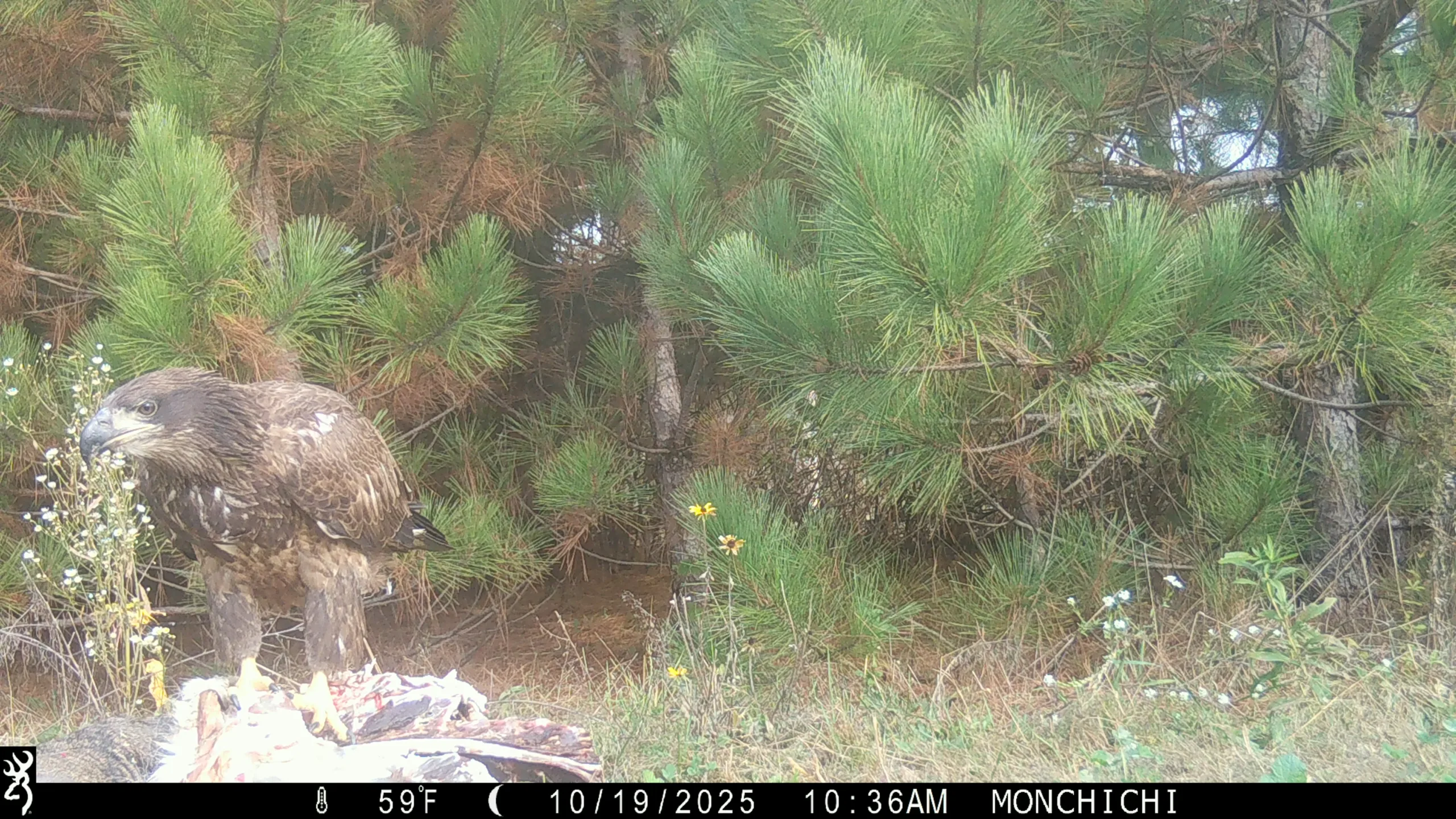
Deer Carcass Cleanup: What Wildlife Eats the Remains?
A harvested deer feeds more than the hunter’s family. From bald eagles and crows to coyotes and raccoons, discover the surprising variety of wildlife that benefits from deer remains.
Read More about Deer Carcass Cleanup: What Wildlife Eats the Remains?
Take Them With You
More than 50 years later, Daniel E. Schmidt still remembers the rabbit hunt his older brothers let him join — and the lesson that memory carries for hunters today.
Read More about Take Them With You
Sorry, But It’s Not a Bolt
It is time. Time to stop the bickering and childish rhetoric over a simple piece of equipment in the deer-hunting world. I’m specifically talking about the term “bolt” when referring to a crossbow projectile. The term was cute — and technically accurate — when it was coined generations ago. But it has long outlived its […]
Read More about Sorry, But It’s Not a Bolt