
Deer & Deer Hunting

News

Stay updated on the latest news going on in the whitetail world! From jaw-dropping record bucks, news from state agencies and organizations and weird happenings with deer and deer hunters, the D&DH team stays on top of all things deer.
News

D&DH TV Season 7 Starts July 30, 2011 on Versus

By Chris Berens, D&DH Intern Mother Nature has once again declared her power to North Dakota’s deer, deer hunters and the state Game and Fish Department. The department has decided to postpone a trial herd reduction hunt along the Missouri River northwest of Bismarck due to flooding. According to a NDGF news release, 200 antlerless deer licenses were to be issued beginning Aug. 1 to assist in reducing the deer population in a limited area comprised of mostly private land. The hunt will have to wait another year so the department can assess the condition of the habitat and the deer numbers in the area. NDGF was planning on matching deer hunters possessing a hunting permission form with landowners that would allow access to their properties, but most of the landowners are dealing with flood problems of their own, the news release said. The area will still be open to deer hunting for the normal archery and firearm seasons. Earlier this summer the NDGF extended the deer license application deadline from June 8 to June 15 because of the historic flooding problems around the state, according to another department news release. Governor Jack Dalrymple signed the extension that Game and Fish Director Terry Steinwand said would allow hunters to catch up after having more dire issues on their minds. This marks the first time that the deadline has ever been extended. Deer hunters may need more than knee boots to traverse their hunting grounds this fall if floodwaters do not recede; not only in the Dakotas, but also in Arkansas, Mississippi, Missouri, Louisiana and several other states. Floods take a toll on deer, but most deer management biologists agree that deer are very adept at escaping floods and finding safe havens. Only time will tell how affected deer and habitats will rebound, but history shows a good prognosis.

Read More about D&DH TV Season 7 Starts July 30, 2011 on Versus
News

Bidders Take Aim at Iowa Deer Tag

How much would you pay for a guaranteed deer license in Iowa in 2011 or 2012? As much as these guys? This link was forwarded to me today by a friend who has hunted trophy bucks in the Hawkeye State many times. Even he was amazed. According to the listing, the guaranteed license is good for one buck and one doe during the season of the winning bidder’s choice (this year or next year). It is also good for any one season (bow, gun) of the winner’s choice. The promotion is being held by the Iowa DNR in conjunction with the National Wild Turkey Federation. I’m sure many will criticize the DNR, NWTF and the winning bidder over this as a super-indulgence for the rich. I can certainly see that point. However, I also can see this as a refreshing reminder that many people still view free-ranging whitetail hunting as something that’s almost sacred … something that they will pay a pretty penny to participate in, especially when the hunt is in a state that produces some of the biggest deer in North America. Interesting side note: This auction appears to be for a license only. There is no mention of any connection with deer hunting outfitters, private land or special accommodations. Translation: Whoever wins is going to have to find a place to hunt. What are your thoughts? Should state game departments sell lottery licenses in this fashion?

Read More about Bidders Take Aim at Iowa Deer Tag
News

The Science Behind Whitetail Vision

The first scientific study on white-tailed deer vision was conducted by researchers at the University of Georgia in the early 1990s. The research team, led by Dr. R. Larry Marchinton, used electroetingraphs to study and define a whitetail’s range of vision. Electrodes were placed on each deer’s eyes via contact lenses. This allowed the researchers to study optic nerve movements and, hence, monitor sensitivity to different wavelengths of color. One thing they concluded is that ungulates can detect light 1,000 times below our threshold in the blue and UV wavelengths. The researchers also taught us that deer vision is dichromatic, meaning they can basically see into two color wavelengths, blue and yellow. They can basically see blues, yellows, blacks,white and gray. We have reported these findings in Deer & Deer Hunting over the years, but new information is now available. A recent study on whitetail vision was completed recently, with results being published in 2007. This study was also conducted at the University of Georgia, this time by Gino D’Angelo and Dr. Karl Miller. They concluded whitetail vision is about five times better than a human’s. In other words, what a human sees at 100 feet away appears as if it is just 20 feet away to a whitetail. Miller and D’Angelo also concluded that whitetails do not possess the ability to focus clearly at some distances because their eye muscles are smaller and thicker than other mammals. As a result, whitetails appear to be somewhat farsighted. Neither study tested the peripheral vision of whitetails. However, researchers and behaviorists tend to agree that the whitetail possesses a peripheral vision range somewhere between 250 to 270 degrees. These findings not only give us greater insight on deer anatomy, they provide key insights on how to hunt deer in various regions across the country.

Read More about The Science Behind Whitetail Vision
News

Duluth Earn-A-Buck Unchanged

By Chris Berens, D&DH Intern One of the nation’s most successful urban bow-hunting programs will continue in its current form. On July 11 the city council of Duluth, Minn. rejected a proposed ordinance that would require hunters participating in the city’s annual bow hunt to harvest two antlerless deer before harvesting a buck, according a Duluth News Tribune article. Previously hunters have only had to kill one antlerless deer before being able to kill a buck. The two councilors that brought the motion forward were the only two that voted for it out of the nine member council. Their reasoning for the ordinance included that there are still too many deer, even though over 3,000 have been taken in the past six years according to a CBS Minnesota.com article. The other reason they claimed, according to the Duluth News Tribune, was that the Arrowhead Bowhunters Alliance runs the deer hunt like a game.  The Arrowhead Bowhunters Alliance is a local Duluth organization that organizes the annual urban deer hunting for the city of Duluth. They are responsible for all of the participants of the deer hunt, which are chosen from a lottery of its members. Each participating deer hunter must pass an archery proficiency test to prove they are accurate with their equipment. The hunter must hit four out of five arrows in a 6.25 inch bull’s-eye placed on a target at a distance of 20 yards.  Members of the ABA said that they thought the urban archery deer hunt works just fine the way it is and doesn’t need any ordinance changes, the article said. As Deer & Deer Hunting’s Managing Editor Jacob Edson mentioned in a recent blog post, many earn-a-buck programs do work in the right situation, and overpopulated urban zones are often just that. Many states offer urban white-tailed deer hunting options for hunters using archery equipment. It is often the only viable, and least expensive, option for communities and their taxpayers. Plus, these hunts can be wonderful opportunities for urban dwelling bow-hunters to find nearby hunting access.

Read More about Duluth Earn-A-Buck Unchanged
News

Pennsylvania Deer License System Fails

By Chris Berens, D&DH Intern Hunters in Pennsylvania endured a good test of their patience this past Sunday July 10, long before sitting in a tree stand this coming deer hunting season. According to a Pennsylvania Game Commission news release, the automated licensing sales system the state uses was disrupted for about 10 hours between 11 a.m. and 9 p.m. The problem prevented license sales from being finalized at point-of-sale agents. A large number of resident hunters were attempting to buy their regular deer hunting licenses on Sunday so that they could apply for antlerless deer licenses beginning on Monday July 11. Over 600,000 hunters in Pennsylvania annually take to the field in search of venison for the freezer, and antlerless deer account for more than half of the state’s annual harvest. Fawn and doe bleat calls can be a great tactic to help fill some of those antlerless tags.  Dot Derr, the director of the Game Commission Bureau of Administrative Services, said that about 85 percent of sales agents had difficulties during the interruption, and that 2,000 transactions had been corrected already with 5,173 to finish. There was no information on the number of license buyers that were turned away because of the problem. Active Network Inc., the company contracted by the state to provide the license sales system, has resolved the issue and is working with the commission to correct the uncompleted transactions. The company stated that the problem was due to a glitch in the system and not the high volume of sales, and apologized for the inconvenience to hunters and the PGC, the news release stated. Active Network Inc. provides hunting licenses through automated licensing sales systems for 23 states.

Read More about Pennsylvania Deer License System Fails
News

In Pursuit of a Drop-Tine Buck

Look closely at this buck. Pretty cool, huh? Brad Rucks got this surprise on his trail camera last summer. Although the buck was only 2-1/2 years old, Brad had hoped one of his kids would have got a chance at the buck during the bow or gun season. Unfortunately, that didn’t happen. Who knows, maybe they will see him this year! I’ve always dreamed of seeing a drop-tine buck from my tree stand. Hasn’t happened yet. I’ve shot a few bucks with long sticker points, even one big buck with a 21-inch dagger, but never a drop-tine buck. They’ve eluded me for good reason: There just aren’t that many of them out there! What do we know about drop tines in whitetails? Well, for the most part, we know that most drop tines are caused by genetic coding. Sure, bucks can grow weird antlers because of prior injuries, which could have been the case with the buck in this photo (note how close it is to the pedicle), but most true drop tines are the result of a whitetail buck’s genes. We also know that whitetails across the country will, again for the most part, have completed their antler growth by the end of July. The antler-growing process takes about 100 days. After that, deer will add some mass before the whole growing process shuts down and calcification occurs. Please share your experiences with drop-tine bucks by commenting below. If you have photos, please email them to me here at the office.

Read More about In Pursuit of a Drop-Tine Buck
News

They Don’t Have Whitetails, But They Still Hunt Deer

According to the California Department of Fish and Game, and contrary to what you might have read or heard elsewhere, there are no free-ranging white-tailed deer in the Golden State. This isn’t to say there never have been whitetails in California. DFG records indicate there have been occasional sightings of whitetails in the northeast part of the state many years ago. However, the last confirmed sighting of a whitetail deer was in the late 1940s.  Today, California is home to about 540, 000 deer, which live scattered across 56 percent of the state’s land mass. The population includes six variations of mule deer, and the Columbian black-tailed deer. Blacktails are the most abundant deer species in the state, followed by the California Mule Deer. The state sells more than 150,000 deer licenses annually, and deer hunters annually generate approximately $445 million in economic activity. Although prime hunting is conducted on private land, there is abundant public hunting land in the state; those dates and permits processes are handled by the Bureau of Land Management. Hence, you won’t find many hunters taking to tree stands. This type of hunting is almost strictly spot-and-stalk. It is also interesting to note that California has a large base of archery enthusiasts. These bowhunters are well known for traveling to nearby states to chase deer and other big-game animals.

Read More about They Don’t Have Whitetails, But They Still Hunt Deer
Primitive Hunting in Missouri
News

Primitive Hunting in Missouri

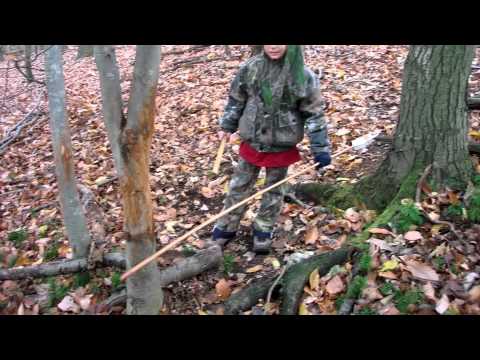
By Chris Berens, D&DH Intern Hunters in Pennsylvania endured a good test of their patience this past Sunday July 10, long before sitting in a tree stand this coming deer hunting season. According to a Pennsylvania Game Commission news release, the automated licensing sales system the state uses was disrupted for about 10 hours between 11 a.m. and 9 p.m. The problem prevented license sales from being finalized at point-of-sale agents. A large number of resident hunters were attempting to buy their regular deer hunting licenses on Sunday so that they could apply for antlerless deer licenses beginning on Monday July 11. Over 600,000 hunters in Pennsylvania annually take to the field in search of venison for the freezer, and antlerless deer account for more than half of the state’s annual harvest. Fawn and doe bleat calls can be a great tactic to help fill some of those antlerless tags.  Dot Derr, the director of the Game Commission Bureau of Administrative Services, said that about 85 percent of sales agents had difficulties during the interruption, and that 2,000 transactions had been corrected already with 5,173 to finish. There was no information on the number of license buyers that were turned away because of the problem. Active Network Inc., the company contracted by the state to provide the license sales system, has resolved the issue and is working with the commission to correct the uncompleted transactions. The company stated that the problem was due to a glitch in the system and not the high volume of sales, and apologized for the inconvenience to hunters and the PGC, the news release stated. Active Network Inc. provides hunting licenses through automated licensing sales systems for 23 states.

Read More about Primitive Hunting in Missouri