
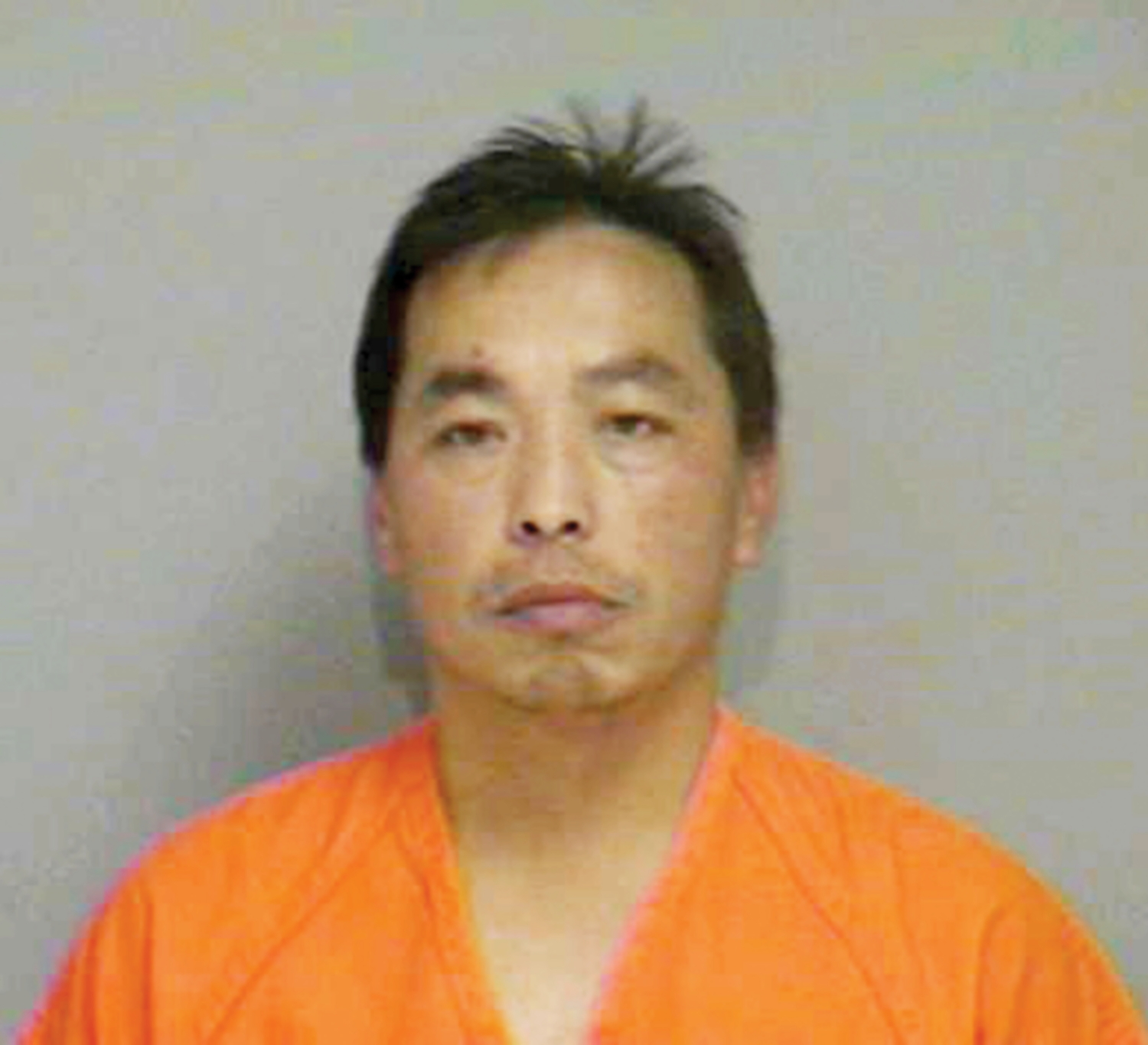
Chai Soua Vang, who murdered six deer hunters in 2004 in what became known as the “Tree Stand Killings,” has died in prison while serving six life sentences for murder.
On Thursday, a status update was entered into Vang’s case file on the Wisconsin Circuit Court Access page, confirming his death as of June 10. No further details have been released at this time.
Vang was 36 years old when he was convicted in September 2005 on six counts of First-Degree Intentional Homicide and three counts of Attempted Homicide stemming from the Nov. 21, 2004, shootings of eight hunters. Six were killed, and two were wounded.

The story below, titled “Deer Hunting’s Darkest Hour” and written by Scott Bestul, originally ran in the June 2005 issue of Deer & Deer Hunting Magazine.
Editor’s note: Deer hunting’s darkest hour occurred on the second day of Wisconsin’s 2004 gun-hunting season when a man shot eight members of a hunting camp, killing six of them.
Doug Wiles sat in his tree stand in the woods near Exeland, Wis., on the afternoon of Sunday, Nov. 21, 2004, just as he had on every opening weekend of Wisconsin’s firearms deer hunt since he’d turned 12. But something was different that day, and Wiles sensed it.
“I kept hearing a plane flying very low, just over the treetops,” he recalls. “Every once in awhile, it seemed the engine would shut off, then start up again. It seemed really odd to me. But at that time I had no idea what was happening.”
Later that afternoon, Wiles learned that the plane was owned by the Wisconsin Department of Natural Resources, and the pilot, a game warden, was just one of many law enforcement officers engaged in one of the most intense manhunts in state history. They were searching for Chai Soua Vang, a Minnesota hunter who’d killed five deer hunters and wounded three others — one mortally — that day (he later admitted to the shootings). The fatally wounded hunter was Dennis Drew, whom Doug Wiles had worked with for nine years. As Wiles waited patiently for whitetails, a man he knew well lay dying in the deer woods only 10 miles away.
“When I returned to camp that afternoon, my dad told me there had been a shooting nearby,” Wiles recalls. “My mom had called into our camp on the two-way radio we keep there and told him what had happened. And when my brother came in from the woods, he said he’d heard officers on loudspeakers, telling people to get out of the woods. We all just sat there in shock and awe. As we listened to the radio, there were just all kinds of reports flying around. It was hard to know what to believe … but we realized that something terrible had happened.”
Death in the Deer Woods
Something terrible, indeed. Wisconsin’s firearms deer hunt — one of the state’s most cherished, and safest, traditions — turned into a terrible bloodbath that fateful Sunday. Killed by Vang’s gunfire were Robert Crotteau, 42; his son Joseph, 20; Mark Roidt, 28; Allan Laski, 43; Jessica Willers, 27; and Dennis Drew, 55. Wounded were Lauren Hesebeck and Terry Willers.
According to widely published news accounts, Vang was sitting in a tree stand on property owned by Robert Crotteau and Terry Willers, both residents of the nearby town of Rice Lake. After his morning hunt, Willers was walking back toward the cabin he and Crotteau shared with their friends, when he encountered Vang. Willers told Vang that he was on private property and must leave.
What happened next will not be proven until later this year when Vang stands trial (which begins Sept. 12). Vang claims Willers and others from the hunting party — who came to assist Willers — surrounded him, shouted racial slurs and threatened him. Vang also claims that one of the hunters aimed a rifle at him and fired a shot as he tried to leave. Although Vang has admitted to killing the hunters, indeed, chasing some down and shooting them as they ran, he contends that his initial response was one of self-defense.
But the surviving hunters paint a different picture. In a court statement, Hesebeck said that Terry Willers radioed members of the hunting party, who were sitting in the hunting cabin about 400 yards away, that he had encountered a trespasser and was waiting for him to leave. Hesebeck, Drew, Roidt and the Crotteaus left the cabin to join Willers, and when they arrived at the scene there was a verbal confrontation. One of the men saw the number on Vang’s backtag (Wisconsin hunters are required to display their hunting license on the back of their outermost layer of clothing) and wrote it in the dust of an ATV fender. Vang was told that law enforcement officers would be called.
At this point, Hesebeck said, Vang began to walk away but stopped at about 30 yards, crouched, and then removed the scope from his 7.62 mm SKS rifle. He also said Vang then turned around and began shooting at the group, hitting Willers. Willers returned fire, but missed Vang. Vang continued shooting, hitting Drew and Roidt. At least 20 shots were fired in the confrontation.
Hesebeck tried to hide behind an ATV, but Vang moved until he was able to shoot Hesebeck in the shoulder. Hesebeck reported that Robert Crotteau and his son Joseph attempted to run from the scene, but Vang chased them down and shot each of them in the back. Robert was found about 40 yards from the initial scene. Joseph, shot four times in the back, died about 100 yards deeper in the woods.
Hesebeck then radioed to the cabin for help; another hunter soon arrived and was able to transport the wounded Willers (who had been shot in the neck) away. Hesebeck said that Vang reappeared in the area and Hesebeck fired at him.
Other hunters from the cabin soon arrived on ATVs. Among them were Jessica Willers (the recently engaged daughter of Terry Willers) and Allan Laski. Vang admitted shooting at them and watched them both fall from the ATV to the ground. At some point during the encounter, Vang took off his reversible blaze-orange/camouflage vest and turned it camo-side out. He also told investigators that he reloaded his semiautomatic rifle with several rounds, then found a hunter standing at the scene and yelled “You’re not dead yet?” and fired at the hunter again.
By the time the ordeal ended, eight hunters lay on the forest floor. Vang ran from the scene, carrying his rifle. He later told investigators that, not wanting to shoot any more people, he emptied his rifle of ammunition and threw the rest of his ammo into a swamp.
The Manhunt
After Vang disappeared, someone from the Crotteau party was able to dispatch a cell phone call (a nearly impossible task in the heavily wooded area, because it’s a place with few signal towers and terrible reception) to alert authorities. Law-enforcement officers from several agencies — WDNR wardens, state patrol officers, county and local sheriff’s deputies — converged on the remote area, then established roadblocks and sealed a perimeter. First-responders arrived to care for the wounded. What had been a quiet, happy hunting camp only hours before had been transformed into a grisly crime scene.
Sawyer County, Wis., is big, rugged country. Its hardwood ridges and spruce swamps are intersected by only the occasional logging road. For much of the year, large chunks of these wild lands see little human traffic, but during the state’s annual nine-day deer hunt, the woods are different. Cabins that stand empty for 50 weeks are abuzz. Tote roads normally devoid of traffic are traveled regularly by ATVs. And deer trails are watched by hunters young and old, male and female — waiting for a chance at a whitetail.
Had Chai Soua Vang disappeared into these woods at any other time of year, catching him might have been either impossible … or a simple matter of waiting for him to appear at a roadhead. But now there were other hunters to worry about, and police were faced with double-duty: catching Vang, and doing their best to protect other hunters from an armed-and-dangerous suspect. Officers drove roads surrounding the block of timber near the shooting, warning hunters through megaphones to leave the woods. Nearby cabins were visited and emptied. Wardens waited at road blocks, warning hunters they met that this was no longer a safe place.
The accompanying manhunt was equally intense. Planes were put in flight to seek Vang from above, and SWAT teams were dispatched to hunt him from the ground. A helicopter from Minnesota, equipped with heat-sensitive imaging equipment, was dispatched to assist in the manhunt. Officers at the crime scene had noted the backtag number scrawled on the ATV and run a license check; within minutes they had identified Vang and relayed his physical description and backtag number to their colleagues.
Afternoon was giving way to evening when Vang emerged from the woods, riding on the back of an ATV. The driver, who knew nothing of the shooting, had met an Asian hunter dressed in camo as he climbed down from his deer stand. The camo-clad hunter said he was lost: Could he get a ride to a road? The other hunter, unaware of the manhunt, agreed and drove him out. When the pair arrived at a trailhead, WDNR Warden Jeremy Peery was waiting. Peery recognized Vang from the description and arrested him without incident. The man who had turned the Northwoods into a bloodbath was in custody within five hours of the awful tragedy.
The Aftermath
Vang was transported to the Sawyer County Jail in Hayward, Wisconsin, where he remains on a $2.5 million cash bail, waiting for his September trial. The morning after the incident, he waived his right to a lawyer and made a statement, which has largely been recounted above. In December, Vang was formally charged with six counts of intentional homicide and three counts of attempted homicide (he is charged with trying to kill Hesebeck twice). Vang, who pleaded not guilty to each of the charges, is represented by a team of high-profile attorneys. The team includes Steve Kohn, who represented Christopher Scarver — the convict who murdered serial killer Jeffrey Dahmer while in prison.
Although the trial promises to be intense and closely followed, the people of northwestern Wisconsin have had more important matters to tend to in the wake of the shootings. There were six funerals in the region within a matter of days: Robert Crotteau, Joseph Crotteau and Jessica Willers were all memorialized in services at St. Joseph’s Catholic Church in Rice Lake. Services for Mark Roidt and Dennis Drew were held within three days of each other at Our Lady of Lourdes Catholic Church in Dobie. Allan Laski’s life was honored at Holy Trinity Catholic Church in Haugen. The weeks following deer season — normally a time of happy reflection and anticipation for next fall — were steeped in a period of mourning that spread throughout the state and beyond.
That state of sorrow will be forever felt by the families and friends of the victims. And area deer hunters — men like Doug Wiles — will also remember the events of Nov. 21, 2004, in the seasons to come.
“For me, deer hunting was changed forever on that day,” Wiles said. “I will never forget it as long as I live. What many people don’t understand about deer season here is that it is a cherished family tradition that brings families and friends together like no other event. For nine days, people who may not have seen each other all year gather and enjoy each other’s company. For something like this — like a scene from some horror movie — to happen in that setting is too terrible to comprehend right now. We are all talking about it, and that’s what people need to do to deal with their pain.
“I just hope that this won’t change that strong [hunting camp] tradition,” Wiles continued. “I don’t believe the victims would want that to happen. I know I will continue to deer hunt … but I will be thinking about them every time I step into the woods.”
In Loving Memory
The six victims of the Wisconsin shootings were part of a group of dedicated deer hunters who gathered each fall for the state’s annual gun-hunting season. However, they were much more than hunting companions. They were close-knit friends.
 Robert Crotteau, 42, owned a large concrete and construction business. He enjoyed all outdoor sports and was active in local government. He is survived by his wife, Jean; son, Carter; and daughter, Vanessa.

Joseph Crotteau, 20, worked at his dad’s concrete business. He graduated high school in 2002 and loved snowmobiling, four-wheeling and deer hunting.

Allan Laski, 43, lived just a few blocks from the Crotteaus. He and his wife, Pam, have three children: Adam, Aislinn, and Gwendolyn. He loved fishing, deer hunting and watching the Green Bay Packers. He was the manager of a large lumberyard.
Mark Roidt, 28, started deer hunting with his dad when he was 12. When his father passed away a few years ago, Roidt began hunting with friends, including Denny Drew. He enjoyed motor sports and was on the pit crew of a racing team.
Denny Drew, 55, served in Viet Nam. He worked for many years at a telephone company. After a very brief retirement, he teamed up with Lauren Hesebeck (who survived the shootings) and sold vehicles at Link Bros. Ford in Rice Lake. Drew is survived by two sons, Paul and Anthony; a daughter, Heather; and his former wife, Sue.

Jessica Willers, 27, had just bought a new home and set a wedding date with her fiancée. She was shot and killed as she rushed to aid her father, Terry Willers, who was wounded in the shootings.
Photos courtesy of rice-lake-hunters-memorial.com
— Scott Bestul was an award-winning freelance writer and regular D&DH contributor.