
In 2019, Iowa was hammered with an epizootic hemorrhagic disease (EHD) outbreak that wiped out masses of whitetail deer. With less deer in the woods, hunter numbers started dropping like flies. It’s expected that hunting license sales will once again take a hit in 2020.
Although the state’s Department of Natural Resources (DNR) has no way of tracking exact numbers, it is believed that thousands of deer died as the result of EHD throughout 20 Iowa counties, mostly confined to the south-central part of the state.
“We know the number is going to be several times larger than what we have reported,” Warren County conservation officer Craig Cutts told the Des Moines Register. “We have probably lost thousands of deer. In fact, we know we have.”
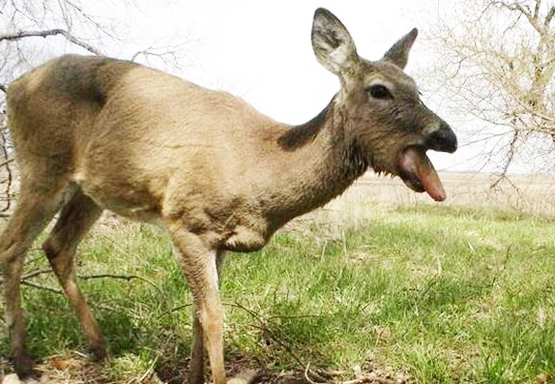
EHD is common in whitetail deer. Unlike CWD which spreads through contact between deer, EHD is transmitted by biting midges often called “no-see-ums” or gnats. The disease causes heart and lung tissue to weaken and burst. Outbreaks of EHD tend to impact deer populations locally, meaning an outbreak may occur in one part of a county but not in other parts. EHD does not affect human health, but it can significantly impact deer herd numbers.
It’s been a few years since EHD ravaged a state’s deer herd. Records indicate 2012 was the most recent year with high EHD activity in the Midwest. That year, EHD killed an estimated 10,400 deer across at least 29 counties in Michigan.
Over the past decade, large outbreaks of EHD have been reported in states like Montana, Illinois, Indiana, Iowa and Kentucky. Outbreaks of EHD are most common in the late summer and fall. They continue until a hard freeze kills the insects.
Iowa Stats
- Deer license sales were down about 12% going into the state’s annual gun-deer season
- Harvest was down
- Five-year average harvest: 104,366
- 2018 harvest was 108,401
- Estimated 2019 harvest was 86,158 — a 21% drop
- 18,208 fewer deer harvested than the five-year average
“The deer herd can recover from this, but if we had another year where we had the same conditions, we might end up with a very low population for a number of years,” said Jim Priebe, director of the Warren County Conservation Board. “If everything else stays stable, that deer population will pop back within two to three years.”