
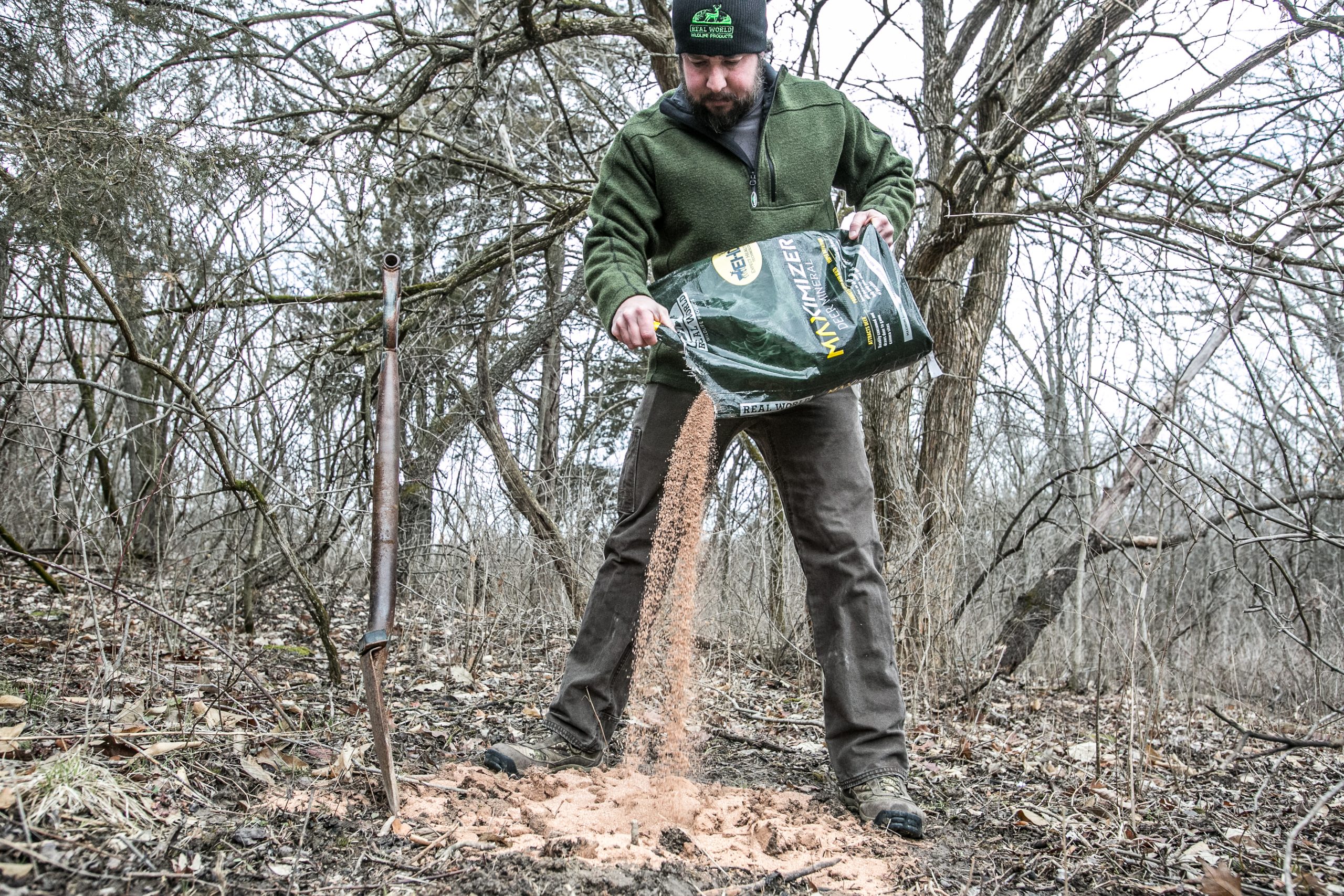
I used to hear this one kicked around as if the answer had to be one extreme or the other.
Either mineral and vitamin supplements were being talked about like they were some sort of miracle cure for every shortcoming in a deer herd, or they were being dismissed like they were little more than expensive dirt flavoring. As is usually the case when hunters get to talking in absolutes, both sides were missing the part that actually matters.
The truth isn’t nearly that neat.
Do mineral and vitamin supplements help deer? Yes, they can absolutely help. Can they make up for poor soils, weak habitat, lousy forage diversity and year-round nutritional shortcomings all by themselves? Nope.
Like most everything else in deer nutrition, the honest answer depends on what the deer are already getting, what they aren’t, and how much of the gap you’re truly able to close.
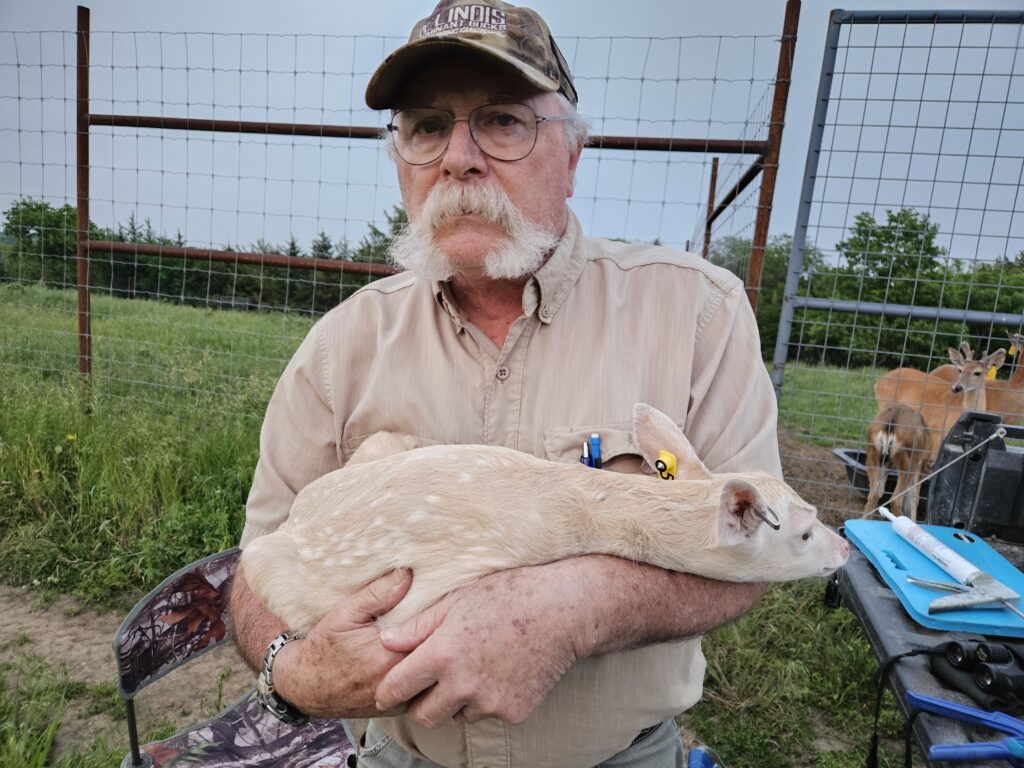
To help sort through the noise, I leaned on two men whose opinions carry real weight. Dr. Clifford Shipley is an Emeritus Associate Clinical Professor with the University of Illinois’ College of Veterinary Medicine and one of the sharpest whitetail-health minds I know. Dr. Aaron Gaines, PhD, is a deer nutritionist with Hunter’s Pursuit, a business that specializes in delivering nutrition to whitetails, who has spent years working in applied deer nutrition and looking at what actually plays out in the field. Both are far too thoughtful to give a lazy yes-or-no answer, which is exactly why their input matters here.
What follows is the real-world answer.
What We’re Really Asking
Most hunters asking whether minerals and vitamins help deer are really asking one of three things.
Will they grow bigger antlers?
Will they improve body size and health?
And are they worth the trouble and expense?
Those are fair questions. The problem is that too many folks want one answer to cover every region, every property and every herd. That’s not how deer work, and it’s not how nutrition works.
A herd living on rich soils, with strong browse, quality ag, good water and year-round habitat security is not starting from the same place as a herd living where soils are weak, forage is lacking and nutritional stress is more common. Put those two herds on the exact same supplementation program, and it would be foolish to expect identical results.
That’s really the backbone of this whole discussion.
Dr. Shipley put it bluntly: “If they aren’t getting adequate nutrition, then the supplemental minerals help them a lot.” On the flip side, “the more all their needs are being met by the forage, which depends on soils … then mineral supplements potentially provide less benefit.”
That right there is the whole game.
The benefit is driven by what’s missing.
Deficiencies Drive the Benefit
I’ve long believed that whether we’re talking habitat, hunting or herd health, the biggest gains usually come from identifying limiting factors. What is the weak link? What is missing? What is out of balance? Once you figure that out, the path forward usually gets a whole lot clearer.
That’s exactly how both doctors framed this issue.
Shipley explained it in very direct terms: “If you look at areas that are… deficient in copper… those deer would absolutely benefit from supplementation of minerals, especially copper. But if they are in an area that has high copper… then they wouldn’t need additional copper in the minerals.”
That’s not a sales pitch. That’s just basic nutrition.
Dr. Aaron Gaines came at the same truth from a diagnostics angle. He noted, “That liver mineral analysis looks at specific minerals — particularly micro-minerals like copper, manganese, zinc, and selenium.” He added, “We know from that liver mineral analysis that certain minerals are deficient relative to what the reference value should be for those deer.” And because of that, “Based on diagnostics, these deer can be deficient in certain minerals — therefore mineral supplementation would provide a benefit to them.”
That’s where this discussion ought to begin and end.
In deficiencies.
Not in campfire stories.
Not in somebody saying they poured out a bag and grew a giant.
Not in another guy saying his grandpa never used mineral and still killed good bucks.
The right question is whether your deer are short on something that matters. If they are, then supplementation can help. If they aren’t, the upside may be far smaller, but still can offer a significant assist, as you will discover before we’re through.
Why This Is So Hard to “Prove”
One reason this topic gets so much argument attached to it is that wild deer don’t live in a laboratory.
That matters a lot more than many hunters realize.
Gaines said, “The biggest issue is just the lack of controlled data in free-ranging whitetail.” He also pointed out, “Going into the captive deer herd is difficult because those deer are being provided a complete diet, fully fortified — so it’s harder to show the benefit.” Then he drove it home even more simply: “In wild deer, it’s really just lack of controlled data.”
That makes perfect sense.
A free-ranging deer herd is dealing with changing forage quality, different soil types, different crop rotations, different water availability, different stress levels, different intake patterns and wildly different access to nutritional resources from one farm to the next. Some deer may hammer a supplement source. Some may use it casually. During the fall, some may rarely touch it. Add in seasonal shifts and you’ve got a messy real-world puzzle.
So no, this is not the sort of thing where we can always point to one perfectly clean, repeatable free-range study and declare the matter settled forever.
But a lack of perfect field data does not automatically mean a concept is unsound.
Shipley made a similar point from another direction, noting that proven deficiencies reduce performance and that broader livestock research can still teach us a lot. “It’s been proven … many, many times that deficiency in minerals decrease body size, rack size, reproduction et cetera.” He added, “And even if there’s no direct deer scientific evidence for certain things, you can extrapolate a lot from livestock research.”
That’s just common sense.
If deficiencies hurt ruminants, and deer are ruminants, it would be pretty odd to pretend deer somehow live outside those rules.
Minerals Help, But Context Rules
Gaines did not dance around the question. “I do think it helps,” he said. He also added some very important qualifiers: “The benefits probably depend on where you’re at in the U.S., based on soil maps,” and “In areas where deficiencies exist, you’re going to have more of a benefit.”
That last line is the one hunters need to remember.
In areas where deficiencies exist, you’re going to have more of a benefit.
Not everywhere equally. Not under all conditions. Not to the same extent. But where nutritional gaps exist, you’ve got real room for improvement.
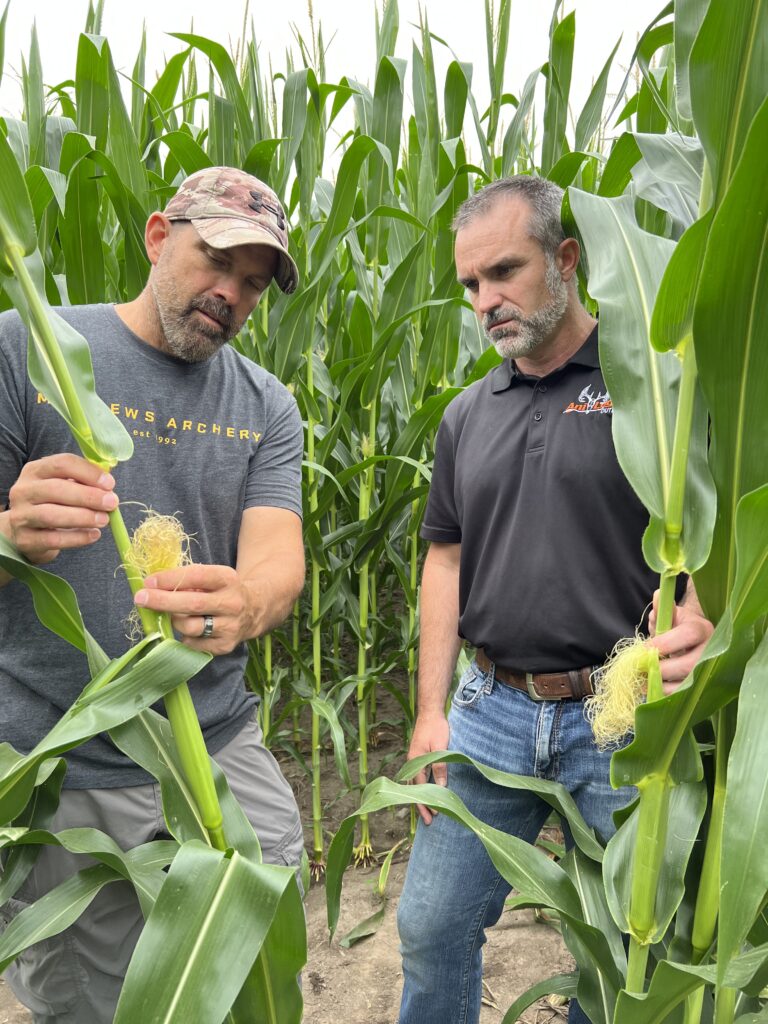
Shipley echoed that same idea and added a point too many hunters ignore: “Very rarely are you going to find a perfect situation where all the minerals are provided in the correct ratio.”
That matters.
Because the discussion is often framed as if deer are either grossly deficient or perfectly fine. Real life usually sits in the middle. They may be doing okay in some categories and coming up short in others. They may be getting by but not thriving. They may be expressing only part of what their body size, health or antler potential would otherwise allow.
And that’s where intelligent supplementation starts to make more and more sense.
Soil and Forage Still Drive the Bus
That said, let’s not kid ourselves.
Supplements do not replace the basics.
If your habitat is weak, your nutrition program is weak. If your soils are poor, the plants growing from them are not going to be what they should be. If deer are relying on poor-quality native browse, low-diversity forage and nutritionally lacking food sources for most of the year, no mineral site in the world is going to magically erase that.
Again, Shipley said it cleanly: “The more all their needs are being met by the forage, which depends on soils… then mineral supplements potentially provide less benefit. In areas that are lacking, they potentially provide much more.”
That’s how I’d urge hunters to think about this. Supplementation should be looked at as exactly what it is: supplementation.
Not replacement.
If you can improve soils, improve forage diversity, increase digestible native nutrition, better time your food availability and reduce stress, you’re helping deer every day. Supplements can then help fill in gaps that still remain. But they are not a shortcut around weak management.
I look at it no differently than hunting. You can buy the fanciest gear in the world, but if you blow access, hunt the wrong winds and educate every mature buck on the property, you’re still going to struggle. Mineral and vitamin programs work the same way. If the foundation is weak, the add-ons can only do so much.
Product Quality Matters
Another mistake I see all the time is people acting like all mineral products are close enough to equal.
They aren’t.
Shipley used copper as an example. “Copper oxide… is absorbed slowly over time, but it’s not readily absorbed. Copper sulfate… is fairly readily absorbable. But if you… put copper attached to a proteinate… the copper is even more readily available.” He went on to say, “As a general rule… the more readily available [forms] tend to cost more money.” And if a form isn’t digested? It can “simply dump out the back end.”
That is a big deal.
Too many people compare bags strictly by weight or price tag, when what really matters is what’s in them, in what form, and how available those ingredients are to the deer consuming them.
Shipley even addressed the old you-get-what-you-pay-for idea pretty directly: “For the most part, that is a correct statement … if you’re paying $12 for a 50-pound bag … versus $48 … it’s probably better mineral. Probably.”
Now, that doesn’t mean the most expensive product is always the best. It does mean that cheap is typically next to worthless in this specific category. If the deer can’t effectively use what you’re buying it’s merely dumping out the back side undigested, which is a waste of their energies and our resources.
Balance Matters Too
This is another place where hunters can get themselves sideways.
They hear that copper matters, or selenium matters, or zinc matters, and then they start thinking in terms of loading in one magic ingredient. Nutrition doesn’t work that way.
Shipley said it plainly: “Everything’s got to be in balance.”
That may be one of the most important lines in this whole article.
Deer do not run on single ingredients. Growth, antler development, reproduction, immune response and general health are driven by systems. Energy, protein, digestibility, water, macro-minerals, trace minerals and vitamins all work together. If one part of that system is lacking, the whole thing can underperform.
That’s why I’m lumping vitamins into this conversation with minerals instead of pretending they are some separate world. They matter the same way minerals do: as part of an overall nutritional picture.
No, a vitamin label is not as sexy to hunters as a mineral bag. But if the question is whether vitamin and mineral supplementation can help deer, then the honest answer is yes, provided those nutrients are helping close real nutritional gaps.
Again, though, it has to be seen as part of the full picture.
And here is a big one that next to never gets covered. The best mineral and vitamin supplements all have additives that simply aid their digestive process for every darn thing they consume.
Now, that doesn’t seem overly exciting, but think about that again. The best of the best are not only providing minerals and vitamins potentially lacking in the deer’s diet, but also aiding in them getting the max they can from every single thing they eat. That is a big deal!
The Biggest Real-World Problem: Intake
Even if you have the right product, the right minerals, the right vitamins and a deer herd that would absolutely benefit from them, there is still one glaring challenge.
Getting enough of it into enough deer consistently enough to matter.
Gaines said, “The trick in a wild deer population is getting them to consume enough each day.” He added, “Deer don’t frequent a mineral site every single day, 365 days a year.” Then he asked the right practical question: “How do you offer other delivery mechanisms — whether it’s a block or feed — to get delivery of those key nutrients and ingredients?”
That’s the issue in a nutshell.
Delivery.
A product can be excellent on paper and still underdeliver if actual intake is inconsistent. One buck may visit regularly. Another may hardly touch it. One doe group may use it heavily in one period and back off in another. So if somebody expects magical, uniform results from a source deer do not hit uniformly, they’re setting themselves up for disappointment.
That does not make supplementation worthless. It just means real-world delivery has to be part of the discussion.
Water, Feed and Thinking Bigger
One of the more interesting things Gaines brought up was thinking beyond the old-school dirt-hole approach. “Water delivery has gotten more popular — water ponds and supplementing the water with different things.” He added, “In nutrition, we joke about it — it’s kind of the forgotten nutrient.” And maybe his most practical line of all was this: “You’ve got to think about water, food, and habitat.”
That’s smart.
Because once you accept that supplementation is really about delivery of needed nutrients, then the conversation naturally gets bigger than one site or one bag. You start asking better questions.
How strong is my year-round forage?
How weak are my soils?
How reliable is available water?
What legal and practical delivery methods fit my property?
How much of the year are deer likely to consume what I’m offering?
Those are the questions of somebody trying to actually improve deer, not just feel like they did something.
So, Do They Help?
Yes.
And not in some wishful-thinking way.
They help because deficiencies matter. Balance matters. Intake matters. Bioavailability matters. Water matters. Habitat matters. The whole system matters, and products, such as Real World Wildlife Products Maximizer Plus, that help get the max from everything they eat helps even more!
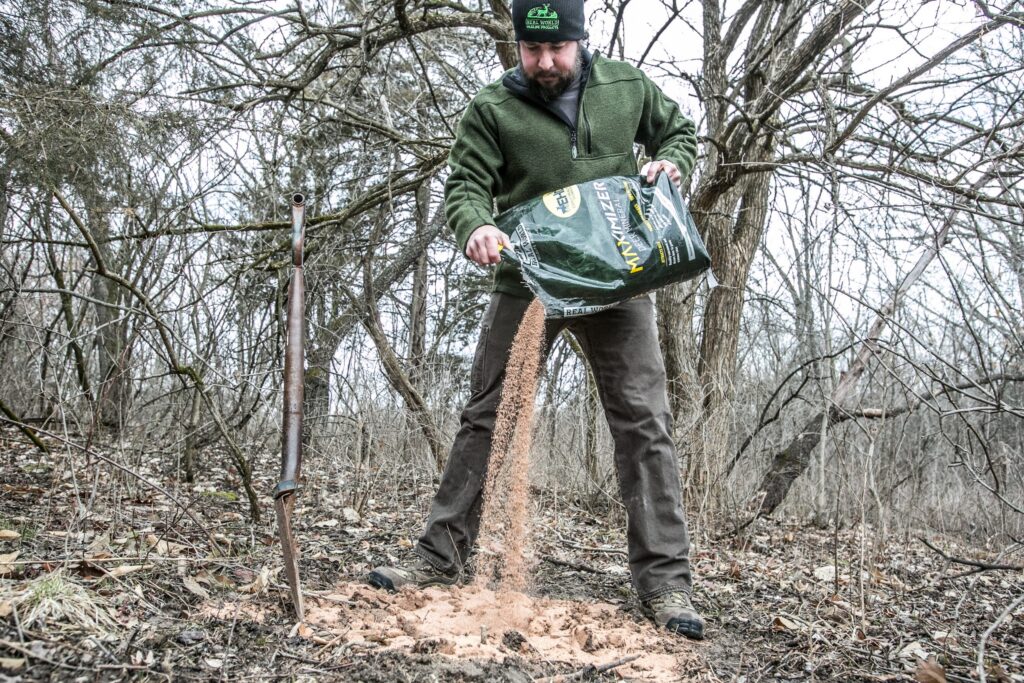
Gaines said he had done mineral supplementation “for well over a decade” and that “we noticed it anecdotally on our farms — improvements in Boone and Crockett score and really overall health of the animals.” Shipley was equally clear that deficiencies reduce body size and rack size, and that correcting those deficiencies can matter.
That’s good enough for me to say this with confidence:
Mineral and vitamin supplementation can absolutely help deer.
But they help most where they are solving a real problem.
If you expect them to overcome poor habitat, weak nutrition, bad soils and sloppy management all by themselves, you’re asking them to do a job they were never built to do.
If, however, you see them for what they are, one more legitimate tool for helping close nutritional gaps, then yes, they are worth serious consideration.
That said, quality matters a ton in this area and additives that help fight disease and max digestion of all foods helps even more.
That’s the honest answer.
Not miracle cure.
Not snake oil.
Just a real tool that can matter a whole lot when used in the right place, for the right reasons, with realistic expectations.