Soybeans that should be standing about 4 feet tall barely reach 24 inches. A clear browse line spans across every woodlot in the area. You can’t glass a field for miles without numerous deer sightings in each one. These are signs that deer numbers are too high. And sometimes, such scenarios lead to the use of depredation deer tags.
Some people hate the idea of depredation deer tag use. Others have misconceptions about depredation deer tags. Here, we’ll pin down the topic and determine the truth behind this commonly hated, but not commonly used, deer-reduction program.
Defining Depredation
Depredation deer tags are best described as special tags issued to landowners that are allotted to legally harvest deer which are causing property damage. Most often, depredation tags are used in agriculture settings. Other times, these tags are implemented in suburban areas. Regardless, for the former, it’s virtually always a result of over-browsing agricultural crops. With the latter, although in a lesser capacity, it’s over-browsing of landscaping, such as flowers, shrubbery, and trees. Sometimes, it might even include the rubbing of trees, such as in orchards. Additionally, this measure is deployed when deer densities become so high that it produces a safety concern (i.e.: vehicular collisions).
Either way, this is a direct method used to minimize economic loss and stress. It usually comes on the heels of rapidly increasing, and unchecked, deer populations. When deer numbers exceed the area’s population carrying capacity, this is sometimes the solution used to bring those numbers back down to more sustainable levels.
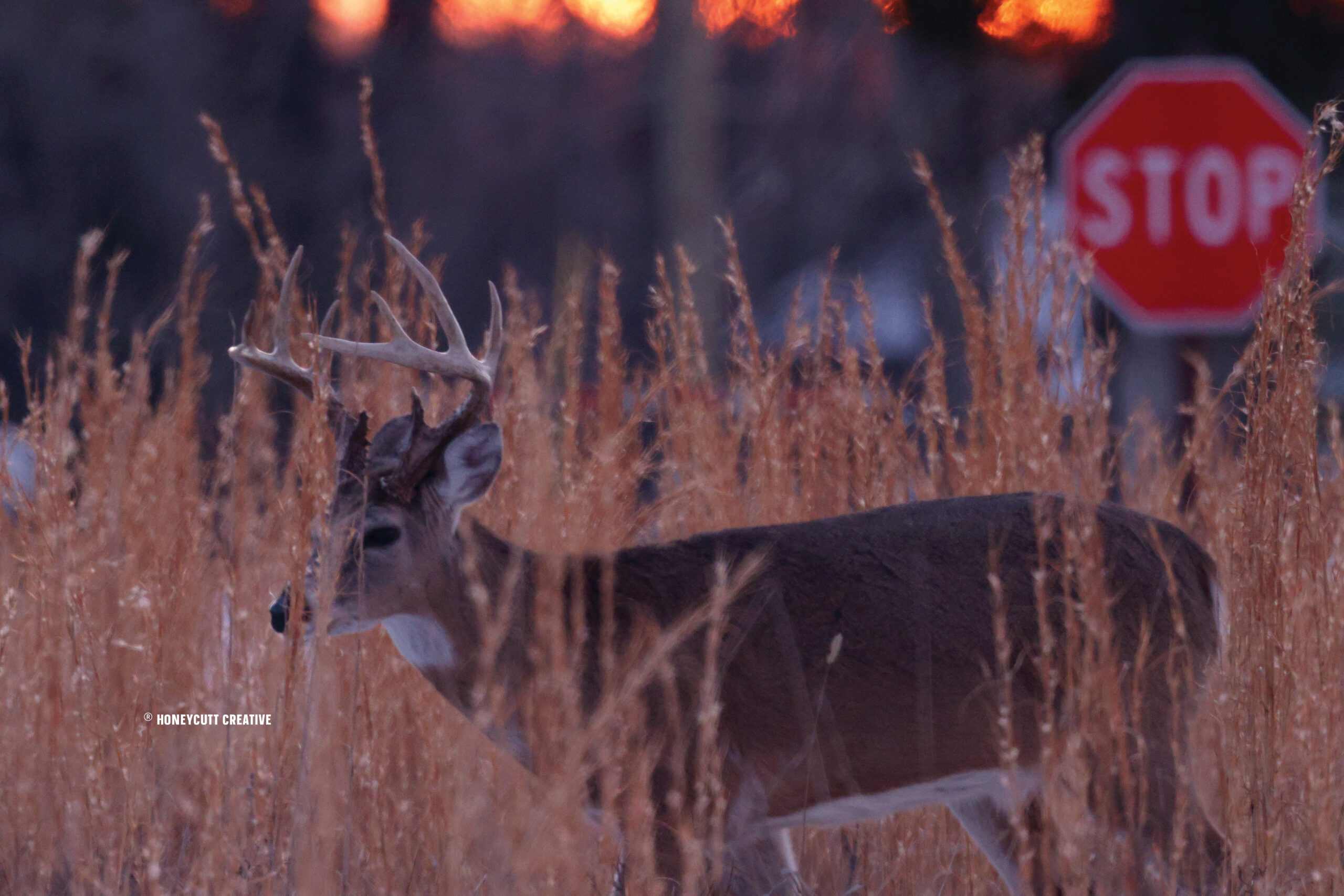
Sometimes, these tags are used to harvest deer outside of regular hunting seasons. Other times, they might be used to harvest an excess number of deer beyond what’s generally allowed under typical bag limits.
Generally, depredation tags are implemented when general hunting doesn’t alleviate damage. Furthermore, these are used when non-lethal measures (i.e.: fences, repellents, etc.) aren’t effective or possible. It’s usually a result of high deer densities.
Push Back on Depredation Tags
Depredation tags haven’t gone without a significant amount of push back. Some hunters disagree with the practice, and they adamantly oppose the implementation of this deer population control measure.
The primary argument against depredation tags is the misuse of the program. Some land managers especially take issue with the harvesting of bucks with the use of depredation tags. They feel this can be misappropriated for abusive use.
Some tout the overkilling of deer well beyond acceptable limits. Others point to insufficient transparency in the use of allotted depredation tags. Still, some suggest trophy bucks are targeted and killed via the tactic.
Others take issue with depredation tags being allowed for harvesting deer at night. For example, Florida allows for the, “Taking of deer either during daylight hours or with the aid of a light at night.” That said, the Sunshine State does not allow antlers or heads to be kept if harvested with a depredation tag.
On another note, many hunters believe excessive use of depredation tags displaces true hunting opportunities. They argue that hunters would be better served if access was granted to properties needing deer removal. Furthermore, they emphasize that the resource would be better utilized, and less waste occurring, if properties were enrolled in a hunter access program rather than a sharpshooter stacking whitetail bodies.
Securing Depredation Deer Tags
The depredation deer tag process varies by state, and sometimes, by regions, units, or counties within states. What can be shot, as well as the when, where, and how, vary by state, too. (More on that momentarily.)
In general, the process begins with a landowner’s or farmer’s determination of need. Damage must be occurring to justify starting the process. Once the initial landowner or agriculture lessee request is made, the state wildlife agency (or state DNR) processes the application.
As part of that system, a state wildlife biologist or conservation officer conducts a site inspection. They’ll look for existing whitetail-related damage. Then, a decision is made if the situation is indeed significant enough for depredation deer tags.
If depredation tags are provided, the agency issues a depredation permit. They also outline how many deer can be taken via this license. It also details the window of time these deer must be taken. It even controls the manner in which deer can be killed.
READ: WHAT KILLS THE MOST DEER IN A YEAR?
In some cases, depredation tags are good for any legal whitetail. That said, in most situations, only antlerless deer may be harvested.
So, who shoots the deer? Generally, depredation tags are given to the landowner. That said, “designees” can be assigned.
Furthermore, what happens to the dead deer? Again, that varies by state. Some mandate that all harvested deer must remain in the field where they fell. Others allow the meat to be processed and consumed. If bucks are killed, some agencies state that the antlers must remain in the field with the carcass, even if the meat can be processed.
Differences Between the States
The handling of deer depredation tags, and the details with how these are used, is highly variable between the states.
According to the National Deer Association’s 2023 Deer Report, bucks can be harvested with depredation tags without additional special circumstances in approximately 1/3 of all states that responded to the survey. Approximately 2/3 allow it only under special situations. (All of the following state-specific info was as of 2023.)
“Most of the states that allow antlered bucks to be taken on damage/depredation tags (22 of 34, 65%) only allow it under special circumstances compared to the 12 of 34 (35%) that allow any bucks to be taken at any time with the tags,” NDA said. “These special circumstances are mostly due to rub damage, threats to human health and safety, and browse damage.”
Looking at specific states, Colorado, Delaware, Idaho, Kansas, Maine, Maryland, Mississippi, Nevada, North Dakota, Washington, and Wyoming, were among those that did not allow buck harvests with depredation tags in 2023.
In contrast, some states allowed the harvest of bucks with depredation tags without any special circumstances (beyond general depredation), but many only allow “any deer” outside of deer season. Some of these include Arizona, Connecticut, Florida, Illinois, Kentucky, Indiana, New Hampshire, New Jersey, North Carolina, Rhode Island, Tennessee, Texas, Vermont, and West Virginia.
Other situations required special circumstances. Alabama allowed it with buck-specific damage outside regular hunting seasons, or human safety hazard situations. Arkansas, Iowa, New York, Oregon, Wisconsin, etc., allowed it under numerous situations, such as around airports, rub damage, public safety, and urban deer hunt situations. Georgia, Pennsylvania, and more, stated bucks must be causing specific property damage. Michigan, Missouri, Nebraska, Ohio, Oklahoma, South Carolina, and others only allowed it under rare situations, such as in orchards, or under other unique rubbing conditions. Similarly, Virginia doesn’t usually permit antlered harvest with agricultural damage but does allow it for rubbing issues. Others, such as Massachusetts, South Dakota, and Utah, only allowed it under special circumstances, but didn’t stipulate what those are.
Louisiana only permitted it for “unbranched” bucks. Minnesota has two different types of depredation tags, including “Deer Shooting Permits” which can be used on antlered deer but must be in the act of depredating, and they aren’t allowed to keep the head or antlers. Minnesota’s “Depredation Deer Antlerless Permits” are only for antlerless whitetails. Montana permits buck harvests, but the wildlife agency must choose the hunters implemented. New Mexico’s “Jennings Law” permits landowners to kill wildlife they believe is threatening their crops, no tag required.
Some states, such as Pennsylvania, and others, make it clear that it’s state law, and therefore, outside their control.
The Truth Behind Depredation Deer Tags
The truth behind depredation deer tags? It’s highly controversial. Most people, hunters and non-hunters alike, don’t care for it. Agriculture professionals do, though, because in many cases, it’s a necessary tool to protect their crops.
Stories, such as one published by Alfalfa Farmers, which is a publication of the Alabama Farmers Federation, get support from farmers and hunters good and riled up, though. It recalled how one farmer shot 18 does during the summer of 2023.
“I’ve never shot a deer in deer season,” said the farmer. “I’ve only shot in summer when they’re eating up my crop.”
For many hunters, and even non-hunters, this practice doesn’t sit well. Despite being perfectly legal and done under the oversight of the Alabama Department of Conservation and Natural Resources (ADCNR), it turns the stomach. Shooting deer in summer when does are fawning and raising fawns and bucks are still growing antlers? It feels wrong.
Even so, depredation tags aren’t likely to comprise much of the total deer harvest. Rather, according to the National Deer Association’s Annual Deer Report, it is responsible for 2-3% of the total annual deer harvest.
That doesn’t change the fact that deer must, in fact, be managed, though. If that isn’t being done by hunters, a landowner might be forced to consider more aggressive means. And, done under the rules of state law, depredation tags remain a legitimate solution. That said, there must be oversight. And, unless for very specific reasons, should exclude the harvesting of bucks, especially trophy whitetails.
Those looking for more information regarding their state’s depredation deer tags should study their state wildlife agency or DNR’s dedicated page for the matter.
Hunters Must Step Up
Those who are tired of depredation deer tag use have to step up. Hunters must be the solution to high deer densities. Where needed, shoot the required number of does to maintain healthy deer populations.
For landowners and farmers, there are better options than depredation tag programs. Consider leasing to a group of hunters. Establish a hunt club on your property. Even lease your land out to an outfitter, if you so choose.
You might even write some verbiage into lease contracts stating that a certain number of does must be harvested each year to maintain the lease. (Consult with a private lands biologist to assist with that process.) Any and all of these options are better than a deer depredation tag program.
All said, hunters, land managers, and deer lovers must remember — In most cases, a deer depredation tag deployment isn’t the end-all for a deer herd. In fact, bringing deer numbers down to acceptable levels will help the herd in the short and long term. Deer will be healthier. Bucks will grow bigger.
When hunters manage that process, there’s no need for depredation tags. Plus, it looks and feels a lot better when hunters solve the problem that depredation programs were created to address.
Read more articles by the author: