
Clover has long been the gold-standard food plot for whitetail hunters, and for good reason — deer love it, and it’s easy to grow. However, not all clover products are created equal. Real World Wildlife Products (RWWP) Clover & Chicory Blend contains 10 pounds of seed for a 1-acre plot, while many competitor products contain only 7 to 8 pounds of seed per acre. That’s a big difference! RWWP only uses fresh seed with the highest germination rate whereas other companies will sometimes use old seed with a low germination rate. Another way that RWWP stands out from its competitors is that it only uses perennial varieties that come back year after year and are actually preferred by deer.
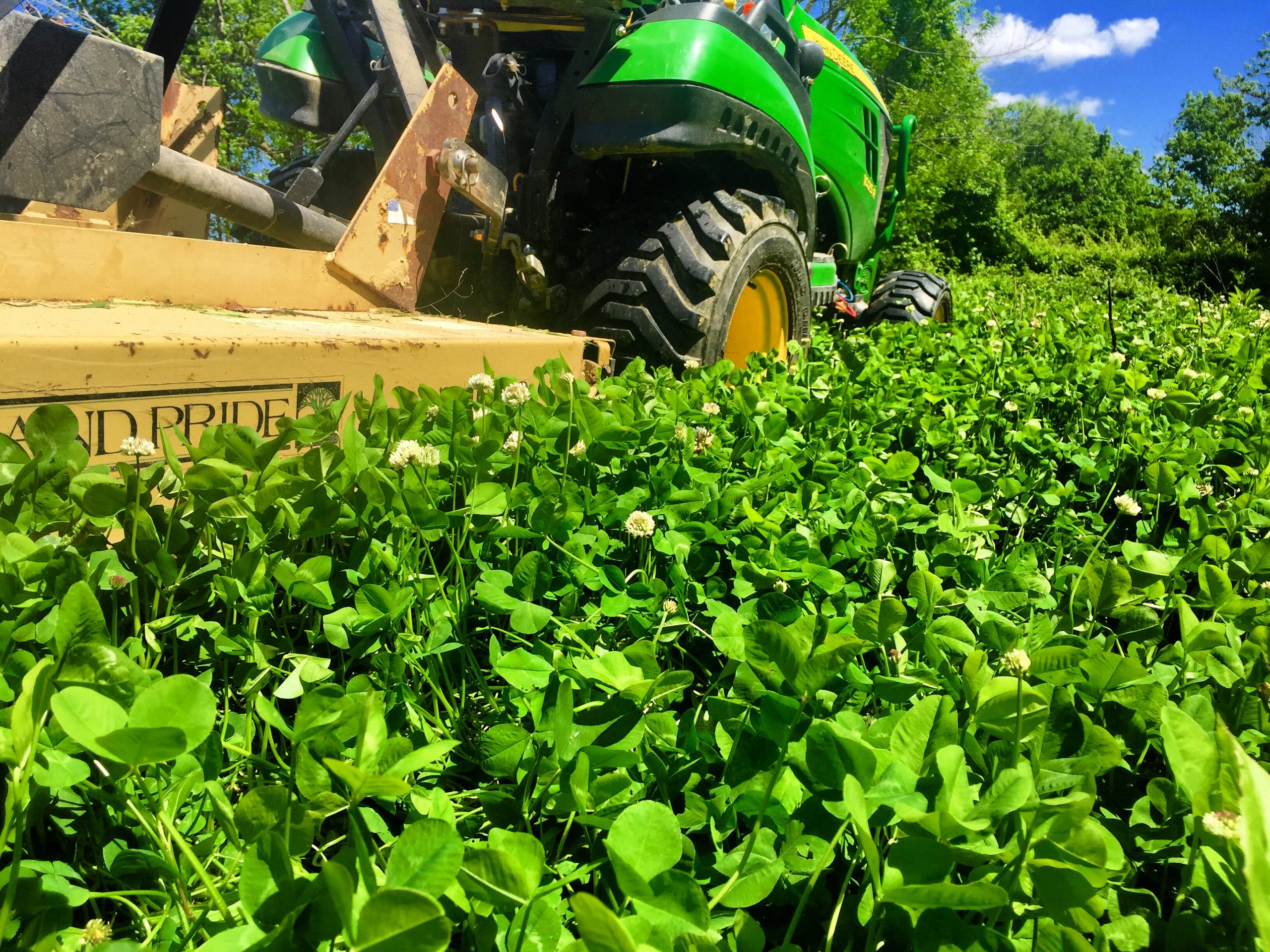
The Clover & Chicory Blend is made up of only the very best seed varieties found in RWWP’s test plots. RWWP started by planting every clover variety they could find side-by-side and letting the deer tell them which ones they preferred. The blend contains 3% chicory which is a great companion crop to clover. Chicory is packed with protein and drought hardy. The particular variety of chicory used in the blend was the most attractive variety in RWWP’s testing. Clover produces tons of forage throughout the year and is a staple for the serious land manager looking to produce the most forage he or she can for their herd. This blend is also great for fire breaks, access lanes, logging roads, and slightly shaded small plots that can be maintained through mowing.
In 2017, Real World Wildlife Products President Don Higgins stumbled upon a unique perennial red clover variety purely by accident. Despite managing a prime whitetail property, he noticed deer consistently leaving his farm to feed in a neighboring hay field. Curious about what was drawing them away, the Real World team investigated and identified the specific clover variety responsible. After conducting nationwide field tests and seeing the same impressive results, RWWP incorporated it into their Clover & Chicory Blend. “We already believed RWWP Clover & Chicory was second to none — and now it’s even stronger.”
Planting Instructions
Planting Dates
Clover & Chicory can be planted in spring or fall, and it’s also ideal for frost-seeding in late winter. For spring plantings, earlier is better to allow plants to establish before hot, dry conditions arrive. Fall plantings are typically best from late August through early September across much of the country, giving the crop time to root before winter freeze. Frost-seeding should take place late in winter while freezing and thawing cycles help work the seed into the soil naturally.
Site Preparation & Planting
Begin by spraying the plot to eliminate existing vegetation. When ready to plant, create a smooth, firm seedbed by disking or tilling to break up large clods. Use a cultipacker or roller to firm the soil before broadcasting the seed evenly across the surface. Finish by rolling or cultipacking again to ensure strong seed-to-soil contact. Because clover and chicory seeds are small, they should remain on or very near the soil surface — burying them too deep can reduce germination.
Frost-Seeding
For frost-seeding, broadcast seed onto a plot that was properly prepared the previous fall. This can be done on frozen ground or even over snow. The freeze-thaw cycle helps incorporate the seed into the soil. We’ve seen outstanding success planting Whitetail Forage Oats or Plot Topper in the fall, then frost-seeding Clover & Chicory into that stand during late winter. Some mowing may be necessary to reduce competition as the clover and chicory establish.
Additional Tip
Clover & Chicory also performs exceptionally well when planted in 10–20 foot-wide firebreaks surrounding warm-season native grass fields. These strips help manage controlled burns while doubling as attractive food plots and natural travel corridors for deer bedding in the adjacent grasses.
Find out more about the Clover & Chicory Blend here.