So-called experts said CWD would wipe out whitetail herds. It hasn’t. Here’s a look back at the history of chronic wasting disease east of the Mississippi and how it compares to other whitetail maladies.
When three Wisconsin whitetails killed during the 2001 firearms season tested positive for chronic wasting disease, many hunters — in Wisconsin and nationwide — considered the diagnosis the death nell of deer and deer hunting as we know it. In fact, shortly after the discovery, numerous Wisconsin biologists forecasted the disease might cause the state’s herd to collapse within 20 years if control efforts failed. Further gloom-and-doom predictions were made as hunters began asking if the disease was transmissible to humans.
Well, that was a quarter-century ago. And guess what? The state today (in 2026) has MORE deer than it did back then.
CWD is a problem for deer herds, but its destructive power isn’t anything new to deer, biologists or hunters. In fact, CWD is just one of several fatal deer diseases, a few of which have been proven — unlike CWD — to infect humans.
It’s easy to forget that diseases besides CWD — many of which most hunters have never heard of — claim untold numbers of whitetails every year. And, although the discovery of CWD in wild Wisconsin whitetails has attracted much attention from hunters nationwide, it has also taken attention away from other pressing deer-health issues.
Here’s a look at some of the many other dangers facing today’s whitetail herds.
1. Hemorrhagic Disease
A major, and long-misunderstood killer of wild whitetails is hemorrhagic disease. Deer & Deer Hunting magazine long ago addressed the ailment in with Walt Hampton’s article, “Epizootic Hemor-rhagic Disease and Whitetails: When Nature’s Plans Ruin Yours.”
What is collectively referred to as hemorrhagic disease is actually two similar diseases — epizootic hemorrhagic disease and bluetongue virus. Both illnesses are spread by biting midges, commonly referred to as no-see-ums. When one of these insects takes a blood meal from an HD-infected deer, it transmits the virus when it bites another deer. Because the midges require warm weather to survive, HD is most prevalent in the Southeast, but it afflicts whitetails through much of their range from late summer through fall.
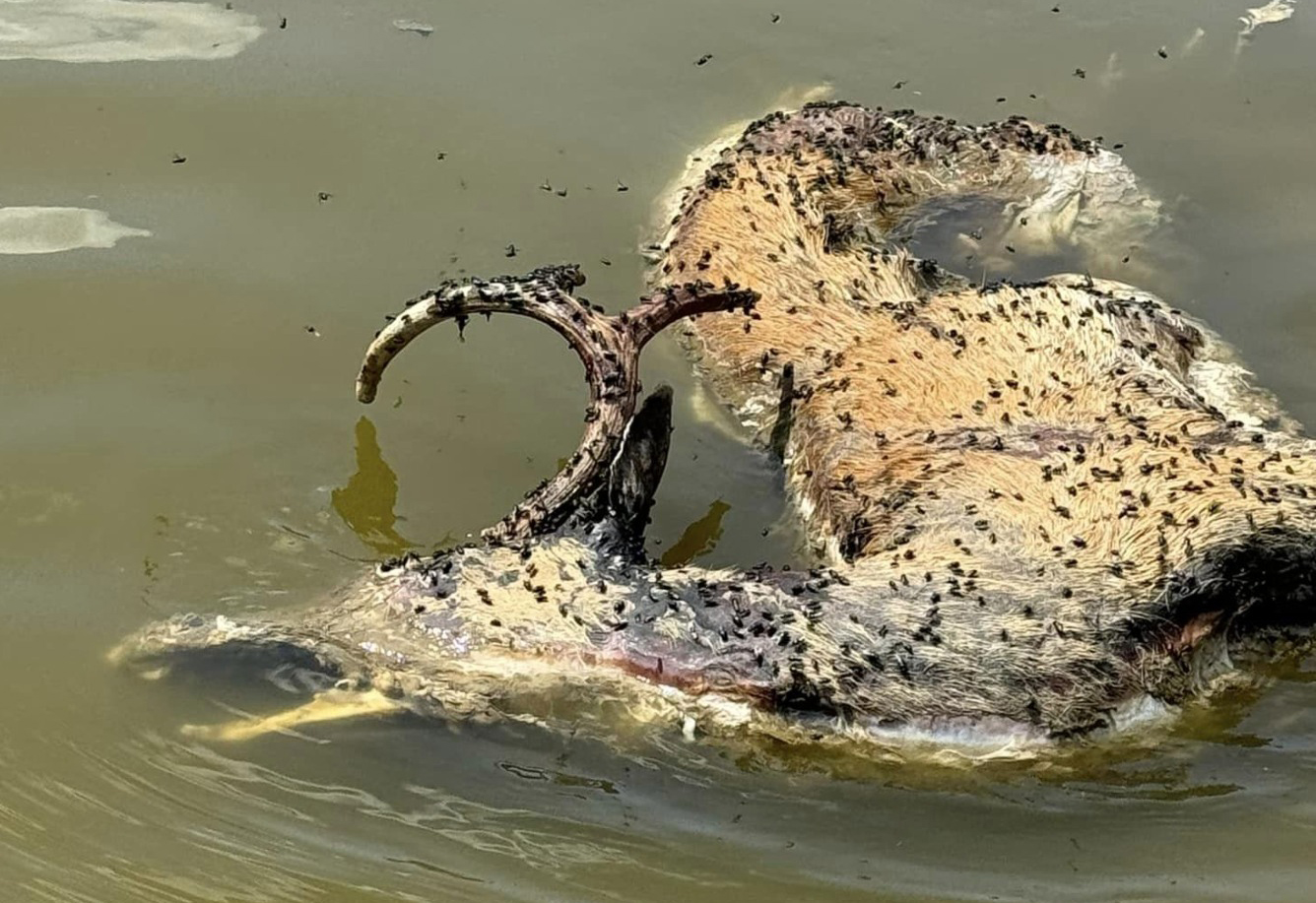
The disease occurs in acute and chronic forms. In the acute, late-summer form, deer weaken and often die soon after transmission. An infected deer’s head and tongue swell, and its organs hemorrhage, especially the lungs. Infected deer are weak, disoriented, and run a high fever. As a result, they often seek water.
In the chronic form, which typically afflicts deer during fall and winter, deer lose weight and their hoofs become sloughed. The pain caused by this condition often causes HD-infected deer to crawl on their elbow joints rather than walk on their hoofs. As Hampton reported, deer surviving this variety of the disease often have decreased reproductive success and lowered milk production among does, possibly causing fawn starvation in subsequent years.
During severe outbreaks, the disease can significantly lower deer populations across a large area. In 1976, for example, EHD killed 30 percent to 40 percent of Nebraska’s deer population. And in the 1940s and ’50s, the disease, which was then known only as “Killer X,” killed untold numbers of deer throughout the Southeast.
Aside from whitetails, HD also affects mule deer, pronghorn antelope and bighorn sheep, although at lower rates. Humans cannot contract the disease.
2. Bovine Tuberculosis
Bovine tuberculosis is another feared deer disease — especially in the Upper Midwest. This, the most-infectious type of tuberculosis, affects almost all warm-blooded mammals, including deer and humans. TB has been diagnosed in captive elk herds in several states, including Wisconsin. Michigan has been diagnosing TB in its wild deer herd since 1994.
In its advanced stages, TB attacks a deer’s respiratory system, causing weight loss and breathing difficulty. Infected deer often have pea-sized nodules on the inside of their ribcage, lungs and sometimes other organs, although such symptoms often manifest themselves only in the advanced stages of the disease.
However, TB isn’t as lethal, nor does it have the same potential for spreading as CWD. In fact, despite its bad reputation, TB is unlikely to affect deer and deer hunting on a large scale. Unlike CWD, TB is a chronic illness and isn’t necessarily fatal to otherwise healthy deer.
“If a deer has a good immune system, they can confine the disease and keep it latent,” said Dan O’Brien, wildlife veterinarian with the Michigan Department of Natural Resources. “When the animal becomes stressed or debilitated, the disease might manifest itself and actually make the animal ill.”
According to O’Brien, the occurrence of TB varies within an infected herd like Lower Michigan’s. For example, in that state’s TB core area, the rate of infection hovers at a bit more than 2 percent. In the surrounding counties, the infection rate is about .5 percent.
Because of its limited spread within wild whitetails and chronic, rather than immediately fatal, effects, O’Brien doubts TB will ever cause the large-scale deer die-offs anticipated with CWD.
“(With TB) you could see significant effects on a population if conditions were right, but it would probably be limited to a small area. TB isn’t likely to affect herds like CWD,” said O’Brien. “TB is never going to cause deer to just drop dead like flies.”
Furthermore, although humans can transmit bovine TB, it is highly unlikely a person would contract the disease from field dressing or eating the meat of an infected deer, as proper cooking kills TB-causing bacteria.
“Thus far, there is no case of bovine TB (in humans) that has been definitively linked to deer,” said O’Brien.
Then why do hunters and wildlife managers hear so much about TB? The answer has more to do with agricultural economics than whitetails. Although TB primarily affects deer on a limited scale, it can have much more devastating effects on beef and dairy cattle. Therefore, controlling TB in whitetails is vital for protecting agricultural interests and the economy.
3. Anthrax
Although usually associated with domestic livestock and humans, anthrax also affects whitetails. In fact, the disease has quietly caused significant die-offs among whitetails across North America.
However, anthrax doesn’t occur everywhere. According to the Southeastern Cooperative Wildlife Disease Study, anthrax usually occurs in areas with highly organic, alkaline soils that experience drought conditions after receiving heavy rains. Unlike CWD and EHD, anthrax is caused by a bacterial infection. Deer primarily contract anthrax spores by ingesting contaminated food or water.
Anthrax-infected deer develop a fever, have difficulty breathing, appear disoriented and quickly die. After dying, deer bloat rapidly. Because these carcasses contain millions of anthrax spores, they are a prime means for spreading the disease, especially because the spores resist heat, chemicals and dry conditions, letting them persist in the soil for years after being deposited.
Perhaps most alarming, humans can contract anthrax while handling infected deer carcasses or byproducts.
4. Cranial Abscessation Syndrome
Whitetails are also occasionally burdened by cranial abscessation syndrome. This condition is caused when Actinomyces pyogenes bacteria enter a wound in velvet-clad antlers or head skin and penetrates the skull, causing a brain abscess.
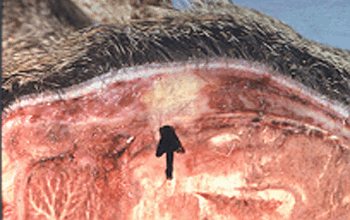
Bucks with CAS look clumsy, and are sometimes unusually aggressive or unwary. Bucks with CAS often have foot sores, swollen eyes and ankles, and soft antlers. In addition, infected bucks often weep pus from their pedicles and eyes. Biologists estimate CAS might cause up to 6 percent of natural buck mortality.
As far as human health risks are concerned, hunters have little to worry about regarding CAS, as proper cooking kills the Actinomyces pyogenes bacteria.
5. Parasites
Although they aren’t technically diseases, dozens of parasites also take their toll on wild whitetails. Two parasites most associated with Midwest whitetails are the giant liver fluke and lungworm, both of which kill deer during heavy infestations.
Parasitism in general becomes more common and takes a greater toll on whitetail herds when deer numbers grow too large and stress the habitat. Therefore, keeping populations in check through aggressive antlerless hunting is vital for maintaining herd health.
6. Human-Caused Illnesses
Not all deer sicknesses are caused by natural means, either. Ironically, people trying to help deer often make them sick.
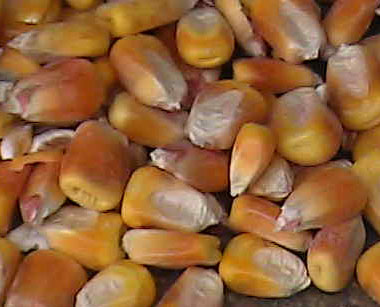 Grain overload, or lactic acidosis, is one example. This ailment, which usually occurs when deer have access to bait piles or supplemental feeding stations, can afflict whitetails. Some deer are simply incapable of digesting the high carbohydrate diet supplied by these artificial feeding areas, and often die as a result.
“Grain overload is a common source of mortality,” one biologist said. “It results from an overload of sugars in high-carbohydrate feed. Their (whitetails’) digestive system can’t handle it all at once, and it causes a metabolic shutdown.”
O’Brien also stressed that baiting and supplemental feeding can cause deer more harm than good.
According to O’Brien, deer are not ideal carriers of TB, which explains why the disease occurs at such low rates within affected herds. Ordinarily, this prevents the disease from being self-sustaining. However, Michigan’s rampant baiting practices and high deer densities gave the disease a unique opportunity.
“The use of supplemental feed and high deer densities were likely contributing to keeping the disease self-sustaining, where it hasn’t been elsewhere,” O’Brien said.
Keeping Things in Perspective
CWD isn’t the only or likely the last disease-related threat to face whitetail herds. In fact, North America’s deer herds are virtually plagued with deadly, often contagious diseases — not to mention parasites, bacterial infections and human-caused dietary problems. But is this reason to panic for the future of deer and deer hunting?
Probably not.
According to Bob Zaiglin, D&DH’s Southern field editor, hunters and the general public must keep such disease concerns in perspective.
Zaiglin stressed that CWD isn’t the first seemingly devastating disease to hit North America’s whitetail population, and likely won’t be the last.
When hemorrhagic disease first appeared on a large scale in the Southeast, biologists and hunters were as baffled and afraid as they are today when facing CWD. However, although hemorrhagic disease did and still does take a toll on whitetails throughout much of North America, it’s not the species-killer hunters and biologists feared it might be when they discovered it.
And despite diseases like CWD — not to mention pollution, predators, poaching, habitat loss and deer-vehicle collisions — deer herds are booming.
As far as human health risks are concerned, Zaiglin again emphasized that people must look at CWD in context with other wildlife diseases. For example, even within CWD endemic areas, such as Colorado and southern Wisconsin, no human death or illness has been scientifically linked to CWD. In fact, Creutzfeld-Jakob disease, the so-called human equivalent of CWD, afflicts only about one in a million people worldwide — and that ratio is consistent in CWD-endemic areas. For perspective, rabies infects 30,000 to 40,000 people per year, while attracting little media attention or fear from hunters.