
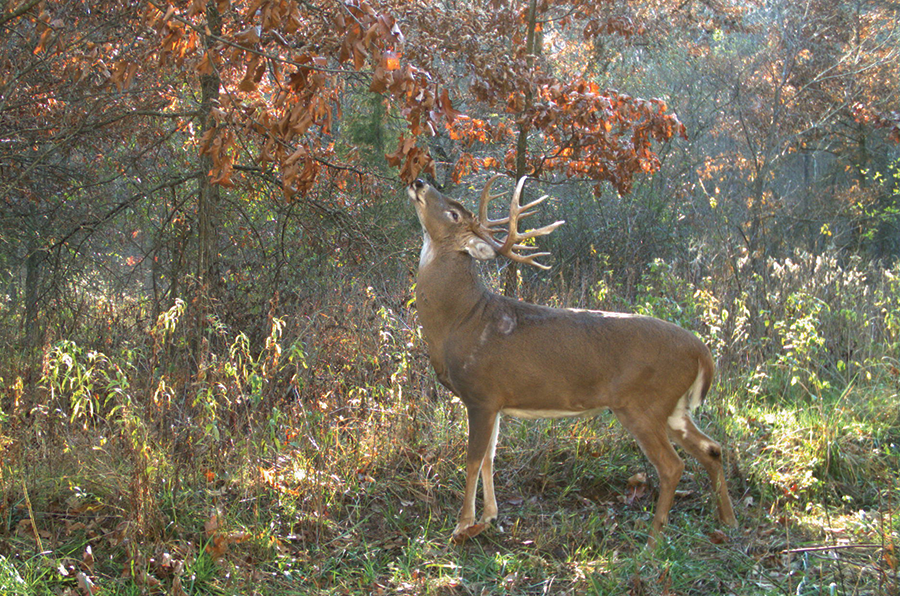
The first time I endured a Blue Tongue and EHD combo gut punch, it threw me for a loop. Managing a 1,550-acre property in West Central Illinois at the time, I watched helplessly as the 15 three-year-old and older bucks I’d identified and was genuinely excited about shrank to five before the season even started.
That painfully disgusting chapter inspired me to learn all I could about Blue Tongue, EHD, and how to prevent their devastating effects, picking the brains of the top deer disease experts out there.
What follows isn’t what I learned from them. In fact, though not intended as a slight, I learned shockingly little from them that I’ve actually seen play out in the real world. No, what follows are my own observations from dealing with these diseases every darn year for well over a decade. Frankly, a lot of my experiences don’t match what we’ve been told.
What We’re Told That Is Accurate
Blue Tongue and EHD (Epizootic Hemorrhagic Disease) are closely related viral infections transmitted by carrier midges biting a deer, which many of us think of as gnats. EHD tends to be more common in deer, and Blue Tongue in cattle, but deer do get both.
The main real-world difference is that deer infected with EHD often die within hours to a couple of days, whereas Blue Tongue typically has higher survival rates and takes closer to a month to kill the deer that don’t make it.
A percentage of deer survive both infections. They’re usually identifiable by their cracked hooves going forward.
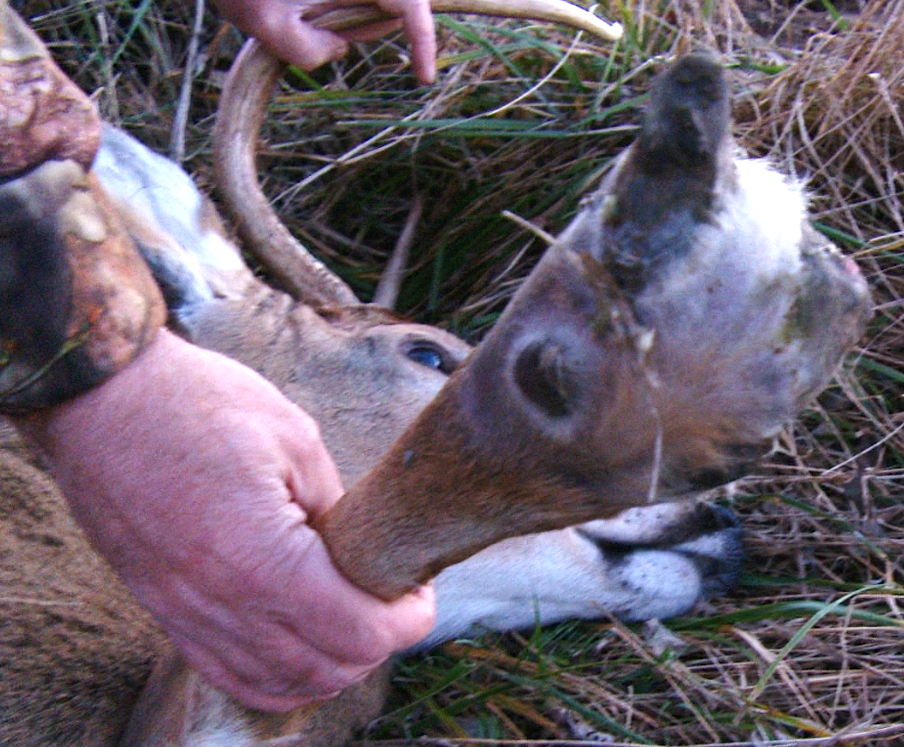
Areas experiencing severe outbreaks often see built-up resistance for the next five years or more. But since these are viral infections, they mutate – just like the cold virus – to get around resistances.
That said, you rarely see horrible outbreaks year after year in the same location. After one bad one, you’re unlikely to get another severe wave for five to ten years. I’ve found all that to play out in the real world.
All About Water
Much of what we’re told beyond that doesn’t match what I’ve seen in the deer woods. The claim that bad outbreaks only occur during dry summers and falls is pure fallacy in my experience. The worst outbreak I’ve ever witnessed came after a normal-rainfall summer and a wet fall, even though the Midwest was hammered the year before and after my peak. All three years had completely different rainfall patterns — one wet, one dry, one average.
In my experience, it doesn’t matter if it’s a wet, dry, or normal year. All that matters is a late summer or early fall rain that causes a midge hatch. And one can almost always count on at least one of those events. That’s all it takes.
We’re told to drain and fill mud flat-producing bodies of water, because midges lay eggs there and require those flats in their life cycle. I believe that’s accurate. Unfortunately, it’s also true that one needs to remove standing water to reduce mosquito populations. Yet I know firsthand how far mosquitoes can travel to my yard, no matter where the nearest water is.
I don’t doubt that draining ponds helps reduce midges in the immediate area. But midges – like mosquitoes – don’t just use what we think of as water. They can come from mud puddles, grass, or even overgrown flowerbeds.
As I type, I’m researching EHDfense, a treatment system developed by aquatic biologists that improves water quality while breaking the midge life cycle. Their three-step process reduces muck levels midges need to thrive while improving the water deer drink. Enzymes and probiotics work together to convert harmful organics into harmless elements, like oxygen, CO₂, and clean water. It’s a triple punch: reducing midge populations, improving water, and boosting deer health.
My concern, based on experience, is that midges can fly more than a mile on their own, and winds can carry them even farther. That means knocking out mud flats is a huge plus, but it won’t solve everything – mud puddles can be just as bad.
The best protection I’ve found is a holistic, all-encompassing approach: address water sources, restore quality with tools like EHDfense, and clean up potential mud flats. Fix rutted roads, low spots, and field depressions that turn into puddles. Pick the low-hanging fruit. Every step helps.
And don’t forget natural controls. Dragonflies and birds are big midge predators. Better water quality helps dragonflies thrive. Bird and bat houses add another layer of defense.
Finally, healthy deer stand the best chance of surviving disease. Not all healthy deer will make it through, but they have much better odds than stressed, unhealthy ones.
Hammering the Mature Bucks
We’re told these viruses hit mature bucks harder than does. I’ve never seen that. They kill mature bucks, yes – but also does, fawns, and young bucks. After one particularly nasty outbreak, a property I managed went from nearly 3:1 does-to-bucks to 1:1.5 – meaning 150% more bucks survived than does.
In my experience, Blue Tongue and EHD are indiscriminate killers. Midges don’t care what sex or age deer they bite. It’s luck of the draw. And neither disease is 100% fatal. I’ve killed two bucks that survived. Both had cracked, damaged hooves — clear signs of past infection. Survivors often live with the cost: limps, stunted antlers, reduced body size.
What I Have Seen
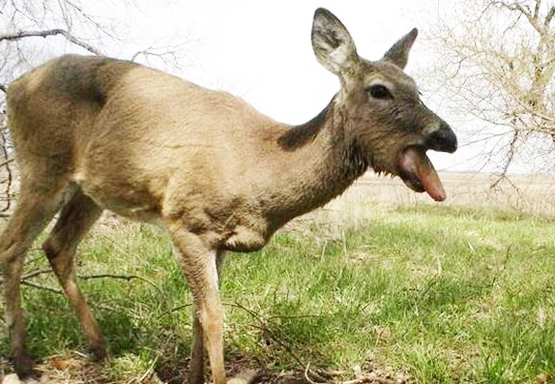
Deer suffering from these diseases lose muscle control of their tongue, which swells and hangs limp. After death, even scavengers won’t touch them. I’ve never seen a vulture or predator eat an infected carcass.
Mortality rates are greatly underreported. On properties I’ve managed, I’ve found more dead deer in winter than were reported in entire counties. Unless tested within a narrow window, many deaths aren’t even confirmed.
Despite claims that outbreaks are all-or-nothing, I’ve seen them every year in farm-belt states. The only real question is how severe they’ll be. In my experience, outbreaks correlate most directly with deer density and habitat health. When herds push past what the land can sustain, mortality skyrockets.
That’s why I work hard to keep numbers in check. Not only does it create healthier, bigger deer, it reduces disease losses. At half carrying capacity, losses on my managed properties dropped from 70% to single digits.
Draining unnecessary livestock ponds also helps in states where diseases occur. In northern states and Canada, where these viruses aren’t as prevalent, I leave ponds alone — they’re too valuable for rut stand locations. But farther south, it pays to drain, clean, or treat them.
We’ll never eliminate every mud puddle, but filling the ones we can, boosting herd health, and encouraging natural predators make a difference.
Conclusion
EHD and Blue Tongue are very real issues. Southern deer have adapted over time, building more resistance. Northern deer haven’t. Fortunately, killing frosts shut down infection in the Midwest and farther north.
Still, much of what we’ve been told doesn’t match what happens in the field. There’s no silver bullet. The best defense is an all-encompassing, nature-friendly approach: build healthier deer, support natural predators, restore clean water, and reduce mud flats.