
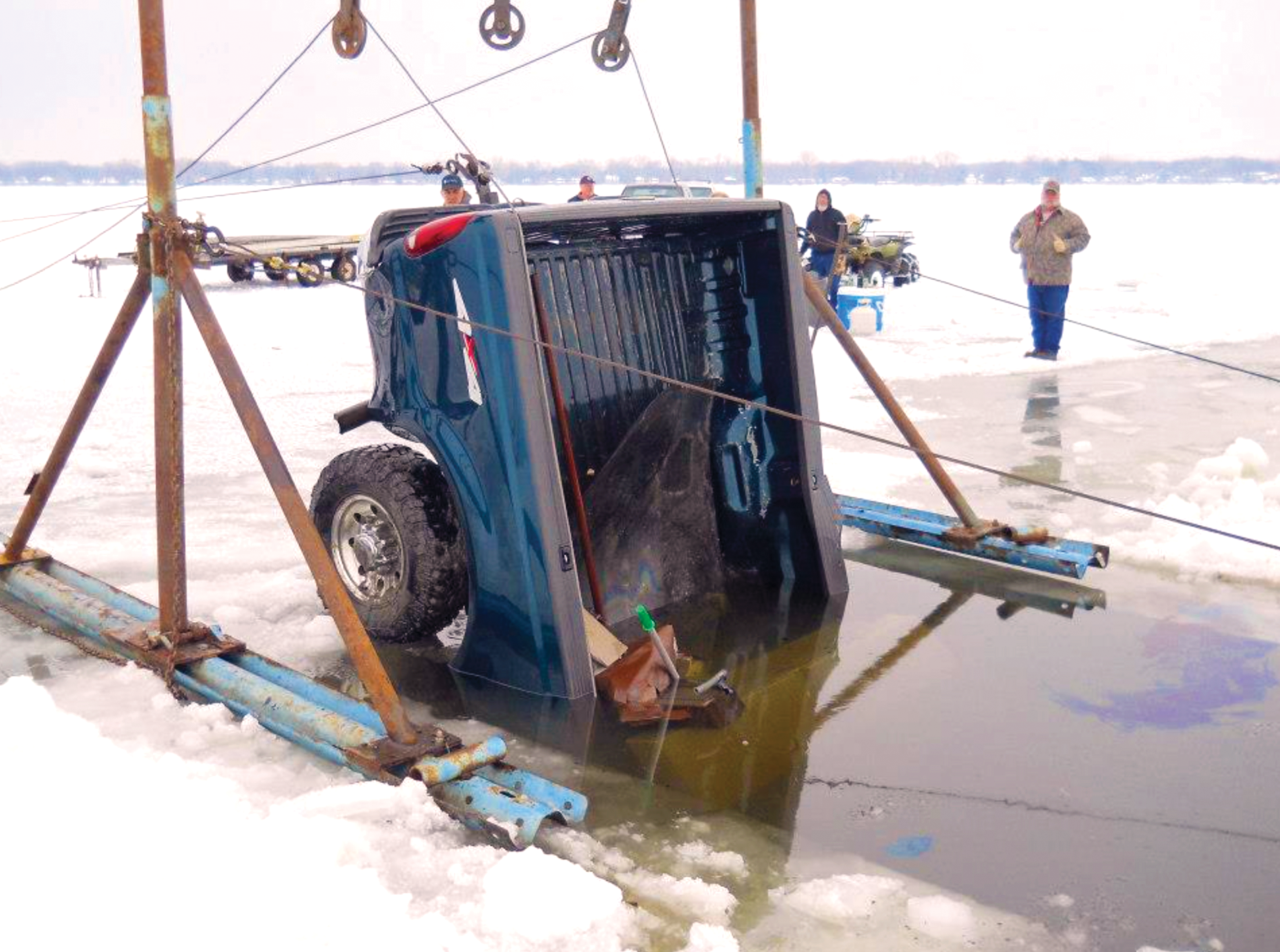
Most central Wisconsin ice fishermen know Don Herman, whether they watch his online videos or see him on the ice. They’d just rather not have to call him during winter.
Herman, often called the ice guru of the Winnebago System, has made a career out of retrieving cars, trucks and other vehicles that break through the ice and sink. Meanwhile, he’s become an important social media figure, well known for his online ice reports and safety tips during winter.
And as you might guess about someone who’s spent countless hours diving in frigid water to pull up sunken objects, Herman has amassed quite a few stories through the years.
“It’s been a very fun career because the jobs aren’t the same,” he said. “Ice conditions are different. The weather is different. And the people are different. We pull them out all the same.”
Sunk?
Herman, 66, of Oshkosh, Wisconsin, owns Sunk? Dive & Ice Service, which specializes in retrieving vehicles that break through ice and plunge into lakes and rivers. He started the business in 1980, after beginning to dive in 1979.
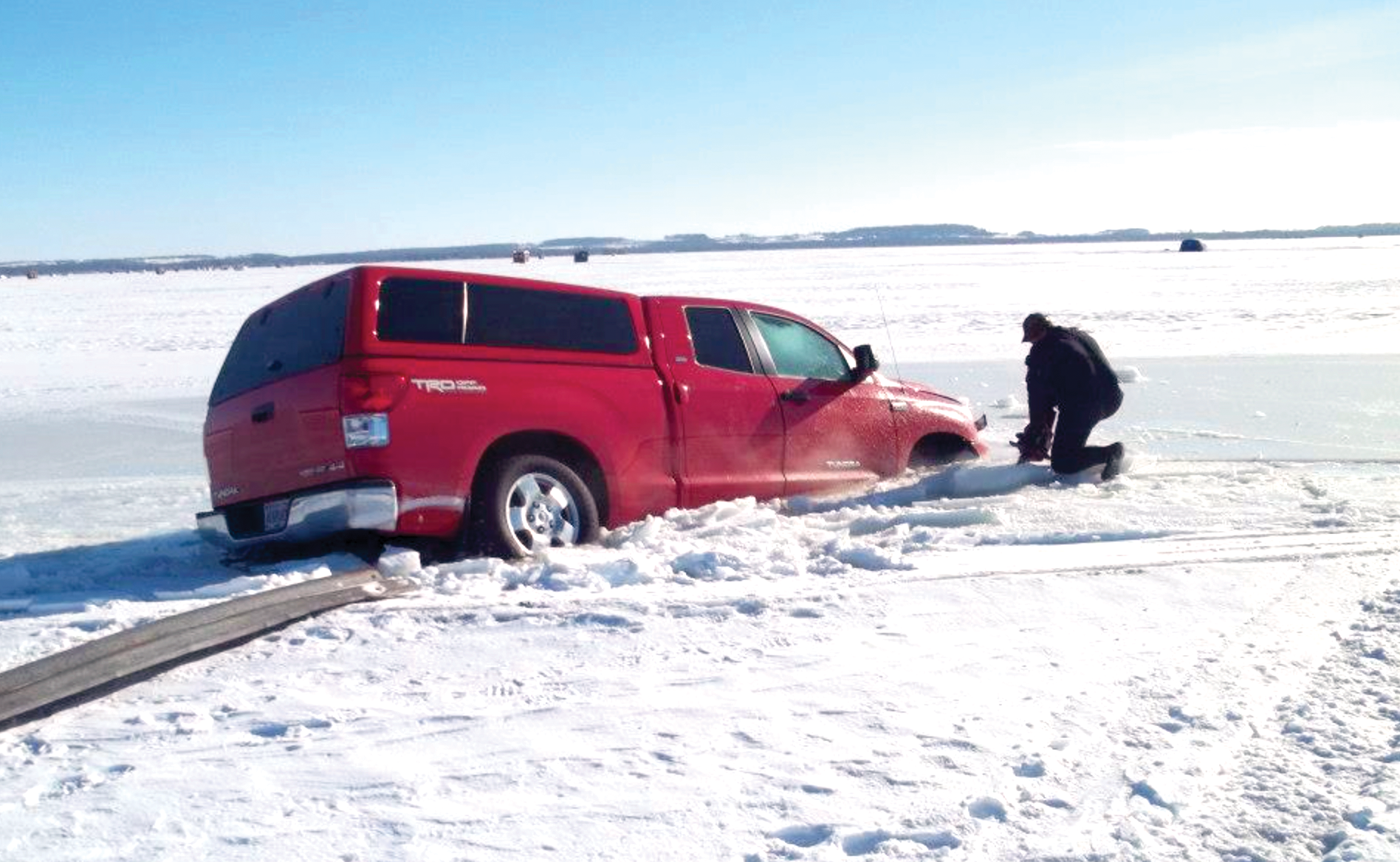
“We started with a vehicle that nobody could get at,” he said. “I went in the water with not even a suit on. Then another vehicle went in, and we just started building stuff. We’ve evolved now to where we do boats, airplanes — whatever goes in the water. We retrieved a helicopter a few years ago — anything that sinks.”
Herman estimated that he and his three-man crew, which includes a diver, average about 20 retrievals per year. That number varies, however. One year, the service performed more than 70 jobs. Conversely, during the winter of 2023-2024, Lake Winnebago — the 130,000-plus-acre lake that serves as Herman’s home base — didn’t freeze entirely, so Herman’s crew only did about a dozen retrievals. And contrary to popular belief, warm winters don’t result in more ice retrievals.
“It’s the opposite of what you think,” Herman said. “When you have good ice and no snow, we can’t mark the roads, and people can go everywhere. Those are our busiest years.”
Although every ice retrieval is unique, Herman said they share similar elements. He’ll typically receive a call from a vehicle owner, sheriff’s deputy or conservation warden after a vehicle goes through the ice. (In Wisconsin, vehicle owners are required by law to have the vehicle removed from the water in a timely manner.) He contacts the customer, makes sure everyone involved is OK and takes care of some payment or insurance details. Then, he gets the vehicle’s location, make and model, and asks about the depth of the water.
“And believe it or not, I ask them if they left their keys in the vehicle,” he said. “It’s amazing how many people take their keys with them.”
Herman and his crew approach sunken vehicles carefully, often on four-wheelers or in a homebuilt lightweight wrecker, stopping to check the ice thickness every 20 to 30 yards. When they locate the vehicle, a diver goes down and hooks it up for retrieval. Often, Herman’s crew uses a homemade boom with hydraulic winches to hoist up the vehicle. Other times, he might use a pontoon boat rigged with airbags and winches to lift the vehicle. And although he hasn’t used it in a while, Herman also has a barge with 16 55-gallon drums and a frame built around it for performing jobs.

After Herman and crew ease a vehicle to the surface, they drag it to shore on safe ice or through a path cut in the ice. Vehicles are typically ruined and will be sold at auction.
“Our first job in deep water took us about a day and a half, almost two days,” Herman said. “Now we pull one out in about four hours. We’ve evolved a lot.”
That doesn’t mean retrievals are easy. Herman said there must be at least 11 inches of good ice to support his boom and the weight it will bear. Also, consider that modern trucks are heavier than their predecessors, and they’re full of water after sitting on a lake bottom.
“When we started pulling vehicles out, most trucks weighed 4,500 to 5,500 pounds,” Herman said. “Now, we’re pulling them out at 10,000 to 11,000 pounds. We actually had to beef up our boom and make the pipes stronger and thicker. We had one two years ago with a gross weight of 13,000 pounds. Trucks got bigger, I can tell you that.”
Of course, technology has made retrievals somewhat easier. For example, side sonar helps Herman and crew quickly locate vehicles that might otherwise be difficult to find.
“We had one this year that went into a crack,” he said. “We drilled holes along the crack and found it with side sonar. The technology has helped us a lot.”
On-Ice Advice
As you might expect, 40 years of performing ice retrievals has given Herman perhaps unmatched insights into ice safety. Moreover, he’s helped check ice thickness, place bridges and plow ice roads on Lake Winnebago since 1975, when he was 17, as a volunteer for the Otter Street Fishing Club in Oshkosh. The club is one of several on the Winnebago System that operate a network of roads and bridges, and keep anglers abreast of ice conditions on the popular water. Herman estimated that he’s spent up to 500 hours per year on the ice for 49 years.

Herman is also well known for his regular ice reports, which often begin at freeze-up and continue until almost ice-out. Years ago, he would tape reports on an answering machine at the Otter Street Fishing Club headquarters, and people would dial in to get information. Now, his reports go out via social media. Either way, the intent remains the same: Give anglers or other ice aficionados the most up-to-date information about ice thickness and safety. That info, he stressed, is critical for safe ice travel.
“A lot of times, folks go out and they’re not watching that stuff,” Herman said. “They’re not informed enough on ice conditions. I would never go out blindly on the ice anywhere. With the fishing clubs on Winnebago, we can keep people informed. But even when you go to smaller lakes, there are usually fishing clubs around the lakes. Often, the best way to find out the ice conditions is to go into a restaurant or tavern on the lake. Someone in there will know what’s going on with the lake.”
Herman said ice anglers should also remember that ice conditions change quickly in response to environmental factors, which makes current information even more valuable.
“When the temperature changes, ice conditions change,” he said. “When it gets really cold, cracks open up. When it gets warm, the ice all pushes together. That happens at lot.”
And even vehicle traffic influences ice, even during winters with otherwise good conditions.
“On Winnebago, we plow roads, but it’s like a regular road with blacktop on it,” he said. “Even when we have 14 to 15 inches of ice, within the first week we put a road in, we’ll get a lot of heavy traffic, and we move the road because it’s going to crack down the middle. All the vehicles made that ice weak. Just because there’s a road doesn’t mean it’s safe.”
Herman believes his regular social media reports have helped spread the word about ice safety. In fact, the number of ice-related fatalities on the Winnebago System has dropped since the rise of social media. Still, he usually ends his reports with a common-sense reminder: “Remember, the ice is never 100% safe.”
Conclusion
Herman said he plans to scale back a bit and retire from plowing ice roads after this season. But with 50 years on the ice and 40-plus below it retrieving vehicles, he’s enjoyed a storehouse of memories and has helped countless people.
“I should have kept a diary,” he said. “When I look back, we’ve had a lot of fun. It’s amazing we’ve done this for 44 years as of this year.”
Read more articles:

