The difference between success and failure can be extremely minute. In the world of walleye fishing, all it takes is getting that split second reaction from a walleye to eat for an ice angler to experience success. A proven method to get that reaction bite is utilizing the walleye’s high-tech forage detecting system of their lateral line combined with their inner ear to your advantage.
Sound and vibration travel five times more in water than in air. From an angler’s perspective, a walleye is always dialed into noise, both for safety and to find their next meal.
From an ice fishing perspective, sound and vibration can be created in many ways. Pounding the bottom with your lure, the jigging action you create, water displacement, rattles, vibration and spinners can all get the walleye’s attention.
The walleye primarily has two ways it detects sound and vibration. The lateral line and inner ear.
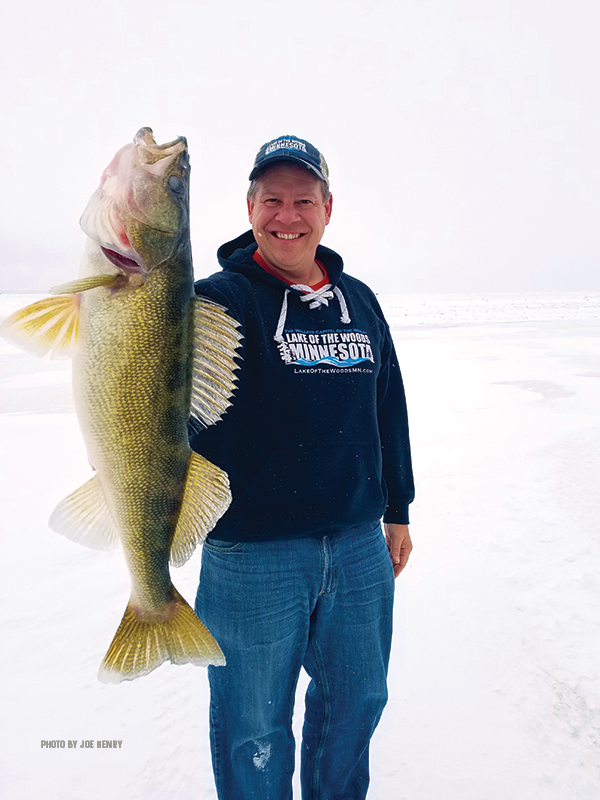
The lateral line runs along each side of the walleye’s body from the head to tail. It consists of a series of fluid-filled canals located just beneath the skin, which are connected to the surface by pores.
Inside these canals are clusters of sensory cells called neuromasts. Each neuromast contains hair cells similar to those in the human ear. The tiny neuromasts of the lateral line face different directions, detecting low frequencies (1–200 hertz). The lateral line detects the slightest vibration in the water, and that vibration not only attracts walleyes, but can cause a natural triggering effect.
The way that a walleye detects sound is from their inner ear, which senses different frequencies than detected by the lateral line (100–2,000 hertz). Between the two methods of detecting sound and vibration, these are highly sensitive creatures that are able to sense prey in most cases, before they ever see it.
In layman’s terms, one hertz is one vibration per second. With the walleye’s range of 1–2,000 hertz, the walleye has a large spectrum of sound and vibration in their underwater world covered nicely.
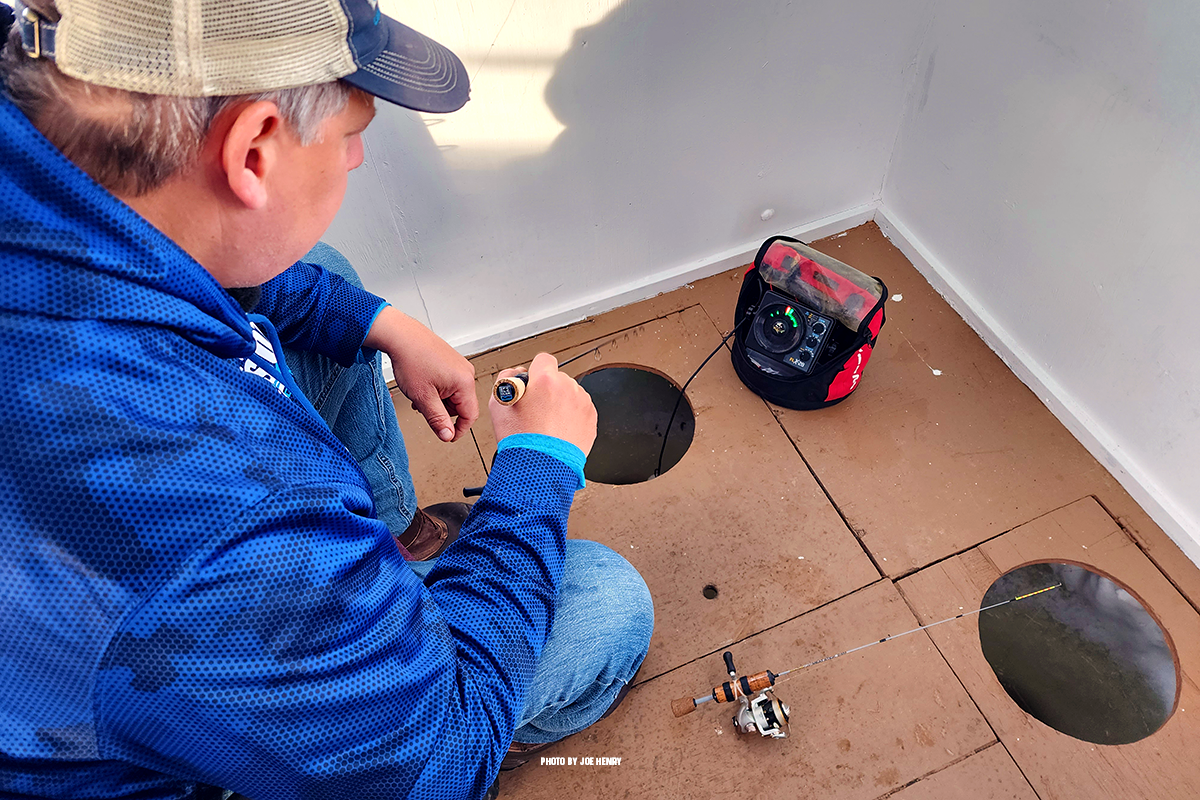
Over the years, I have experienced the benefits of incorporating sound and vibration in my fishing strategies firsthand. I have added presentations that include more aggressive techniques, as well as subtle additions, just enough to get a walleye to eat. Trial and error have proven to me the effectiveness of utilizing sound and vibration to trigger walleyes.
Much of my learning was spawned during times of a tough bite. It could be a cold front rolling through, or perhaps a day when the walleyes and saugers maybe ate yesterday and just aren’t feeding well. Regardless, ice anglers with busy lives need to make hay when they have the chance. This means maximizing opportunities and overcoming obstacles to ice walleyes. Sound and vibration are a big help.
There are a few go-to presentations and lures that I start with when I want walleyes to feel the noise.
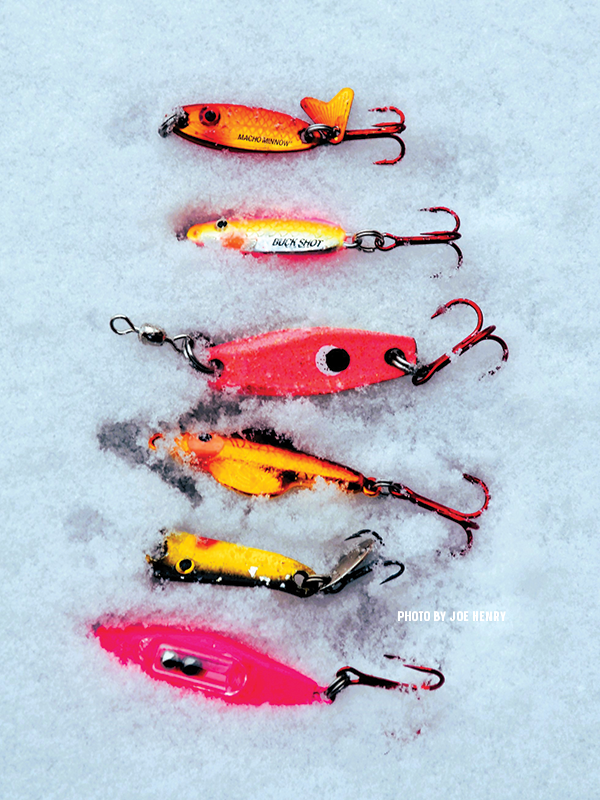
I normally begin with a vibrating lure with BBs in it, such as a Rapala Rippin Rap. For years, I only used lipless crankbaits while open-water fishing, but never used them through the ice. This technique first caught my attention when a local guide up at Lake of the Woods shared stories about how years back, he used to use a Rattle Trap in Four Mile Bay to ice March walleyes.
He said he would be ripping a trap in one hole and deadsticking (a live minnow six inches to a foot off of the bottom) his second hole. There were times, he said, when walleyes would hit that trap so hard that it would almost rip the rod right out of his hand.
I experimented a bit with lipless cranks through the ice but really started having success with the Rippin Rap. Now, it is a lure that I often lead with for my jigging line through the ice.
I experiment a lot with jigging action while watching my electronics, allowing the walleyes to teach me what they want that day. Some days, the walleyes’ moods are consistent, wanting the same action for the lure. Other days, it is basically fishing each individual fish to learn what it will take to get them to bite.
The normal jigging cadence I begin with is to pull the lure up in about two-foot increments, enough to feel the vibration and hear the rattles. I then let it free fall back to the bottom, which is often the strike zone.
I do mix the jigging up, giving extra-long and fast rips, shaking the lure as fast as I can, or elevating the lure in the water column. Oftentimes, bait is elevated, fish see up, and it is natural for them to shoot up to grab a meal.
When a fish slides in slowly, I work various jigging cadences until I get that fish to go. Sometimes, they want the normal jigging routine with a short free fall. Other times, I will hold it just above them a bit and jig it more subtly, much like I would a jigging spoon with a minnow head. Jig, jig, hold in strike zone. Shake, shake, shake, shake, hold in strike zone. Walleyes will actually hit this presentation sitting still, and at times, actually prefer it sitting still in front of them instead of moving.
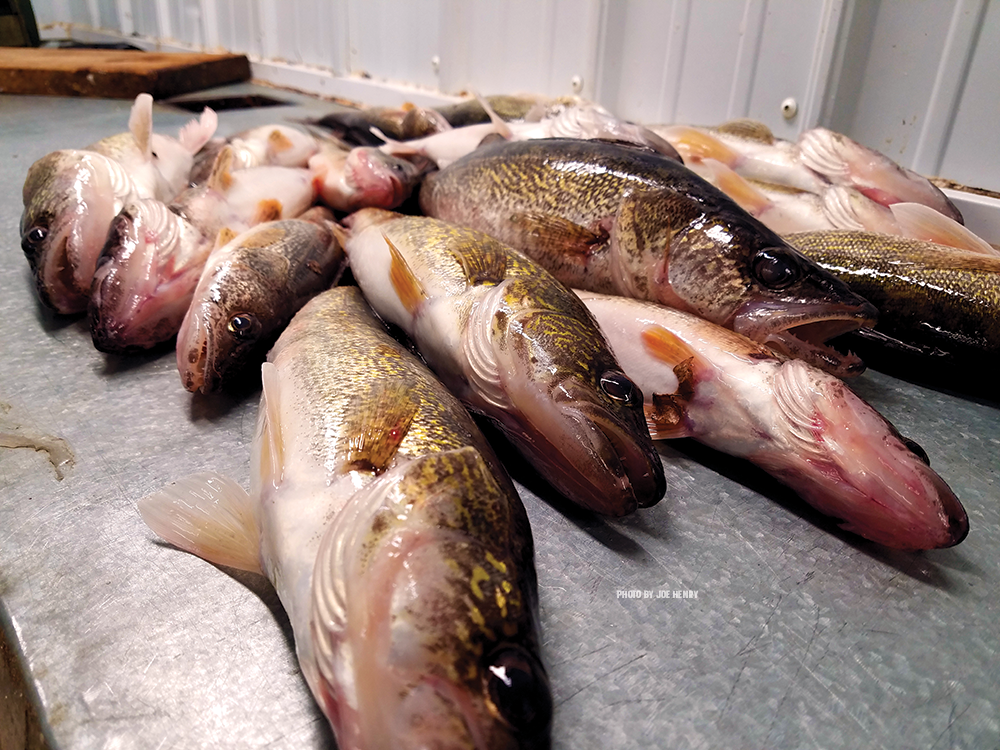
When a walleye flies in out of nowhere, this fish is hot and is ready to eat. Normally, all I have to do is get the lure in front of them, give it a couple of shakes and POW! I have seen this happen often with walleyes when the bite is good and also when fish are not eating. I think it relates to the reaction strike we talk about when pulling crankbaits in the summer.
On Lake of the Woods, as an example, nice walleyes will come through suspended. Keep an eye on your electronics. When you see a suspended fish, get your lure up to them quickly, but when you are about two feet below the fish, slow your reel and gently introduce the lure into their strike zone. Through experience, I have noticed that screaming a lure up to a suspended fish out of nowhere will often spook that fish.
My second choice in lures with sound and vibration is a jigging spoon with rattles tipped with a minnow head or tail. There are certainly times when rattles will outfish a spoon without rattles, and vice versa. As a rule, when I fish stained-water lakes, I am a fan of rattles, sound and vibration.
Whether in the form of a rattle inside the spoon or an extra spinner blade or extra flapper attached to the split ring of the treble hook, creating that extra kind of noise can trigger a walleye.
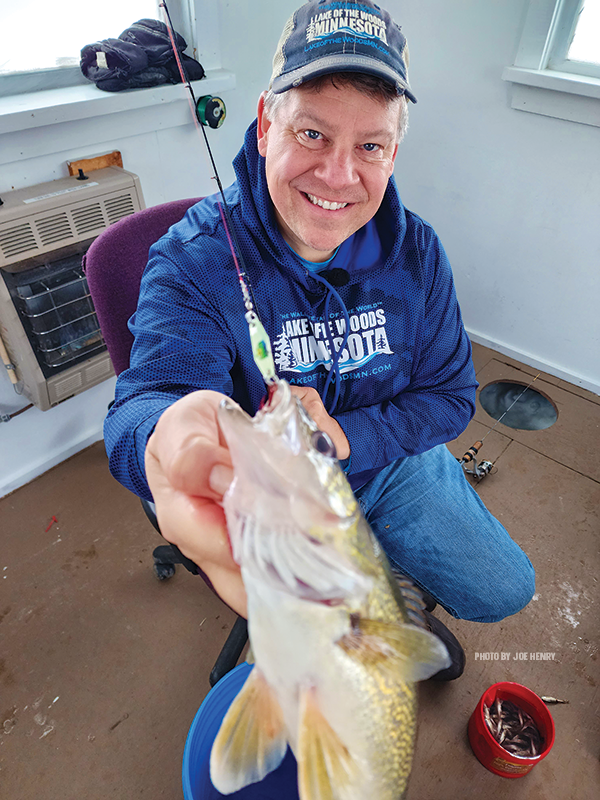
There are many really good choices for choosing a spoon with noise. Tackle manufacturers have dialed in the noise and have come up with some creative ways to gain that extra attention from a walleye or sauger. I use a variety and really let the fish tell me if they like my offering. If too many fish swim through without eating my offering, I will switch up the size, color or action.
With a jigging spoon, similar to the lipless crank, my jigging cadence starts out with a jig, jig, about one to two feet up, and followed by a free fall into the strike zone. If a fish on my electronics isn’t reacting, I will pound the bottom and lift it into the strike zone. This can trigger fish since in the winter walleyes and saugers are tuned into forage opportunities on the bottom, such as minnows feeding or bloodworms or larvae of different types.
My third jigging succession is normally shaking the lure super fast just above the fish and then stopping, letting the lure sit right in front of its nose, or just above it a bit because fish are used to feeding up.
Finally, I emulate an escaping baitfish by shaking the lure with short, fast strokes, while slowly raising the bait in the water column. If you get the walleye to chase, you can often trigger it to eat.
When you are reeling your lure higher in the water column, it is important to not stop the lure when a fish is closing, this will often cause the fish to lose interest. Keep the lure rising in the water column to represent a fleeing baitfish. It becomes decision time for the walleye the higher up in the water column your lure gets. Often, the walleye will hit the lure from the bottom, creating slack in your line. Set the hook!
With the walleye’s high-tech forage detecting system that Mother Nature instilled in them, creatively incorporating sound and vibration into your tactics will ice more fish. It draws them in from a distance, increases the strike ratio and if they don’t hit your jigging line, you have a shot at them with your deadstick, as well. This year, dial up the sound and vibration and ice more walleyes!
Read more: