I’d barely climbed up my stand when I heard the buck grunting as he was trotting in fast! In fact, I was still pulling the bow up when I spotted him, coming right down the point leading to my stand. I had to move way too quickly and somehow remain undetected.
I can’t even really explain how I did it, but I somehow got the bow in my hands. As it appeared I would run out of time, I caught a break when he momentarily paused to inspect the mock scrape.
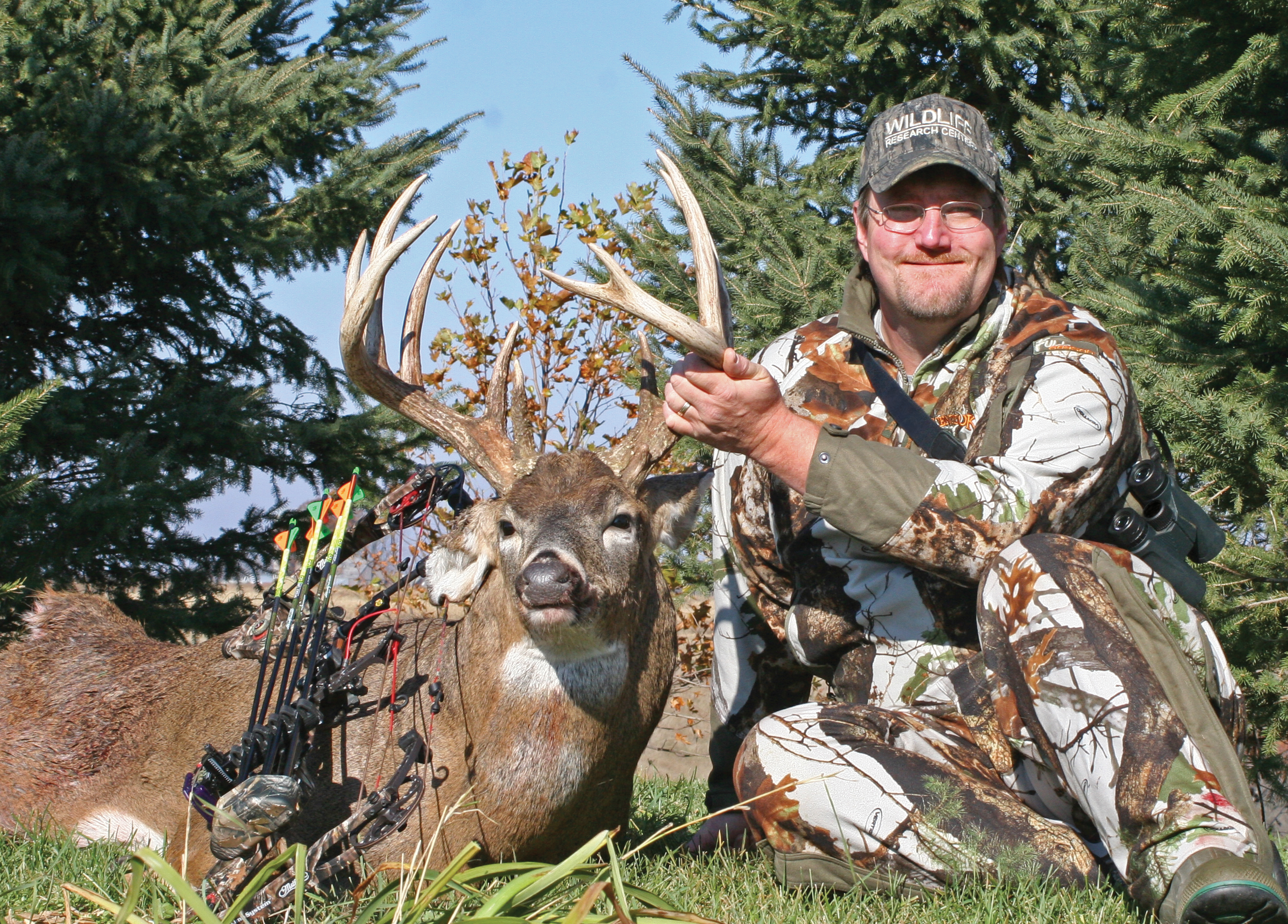
Just as he began turning to leave, I came to full draw and grunted him to a stop. Placing my 30 yard pin, I squeezed off a shot and followed it through his vitals. In less than a minute in stand, my Wisconsin bow buck tag was filled with a 164” brute of an 11 point!
Many see hunting “the rut” to be truly hit or miss, and that is reality for most of us. Great news! A whole bunch of us can take a whole lot of the “misses” out of the equation. Here’s how.
Understanding the Cycle
When it comes to so ridiculously much in life, most certainly deer hunting and management, properly applied knowledge truly is power. When we understand what’s going on in the deer woods and how those deer are using the habitat we hunt, we can truly unleash our most powerful weapon, the power of analytical thought.
Without using the power of analytical thought, gathering and analyzing solid data and using that to make hunting choices, we’re merely throwing darts while blindfolded and hoping we get lucky. For those who enjoy that approach, there’s nothing wrong with it. Just realize that approach most likely has a lot to do with experiencing so many misses.
When it comes to staying in bucks through the rut, frankly, we need to truly understand what’s going on in the deer woods, what the bucks want most and how they typically get it. So, let’s start with the critical knowledge we need to reduce those misses.
We can break the “rut” into a few distinct stages. Now, the less intense the annual winters are in the area, the more these stages tend to bleed into each other. Frankly, it’s Mother Nature’s harsh winters that keep the phases distinct even more than the photoperiod, in that late springs and hard winters take out the fawns of does that come into estrus overly early and late. In the absence of harsh winters and late springs, those fawns tend to survive at a much higher rate, further contributing to a stretching of the rut and the stages bleeding more into each other.
With that out of the way, here’s the stages covering “the rut:”
Peak Scrape Phase: Though bucks scrape all fall long, and even work lick branches year round, there’s really about a 7-10 day window when scrape hunting is truly hot. In the Midwest and points north, Halloween is typically in that window. The mature buck’s testosterone is high, now, breeding in earnest is about to begin and the bucks both want to advertise their presence and claim their spot in the buck hierarchy, before things go nuts. Add it up and they’re tending their most serious scrapes, in areas they feel safe, way more during daylight than before, making them great spots to hunt.
Chase Phase: Immature bucks will chase not receptive does pretty much any time, as they have no clue what they’re doing. That said, about the only time the mature bucks waste their energies chasing not quite ready yet does is right before the area’s doe population starts entering estrus in mass. Unfortunately, the weather “patterns” have gotten so out of whack for much of the Midwest that this phase is pretty much unrecognizable, occurring off and on through October on into December, with the peaks and valleys of does entering estrus. In areas still receiving consistently nasty winters, we’re talking the first few days of November, and it can be a blast, particularly with cooler temps.
Breeding Phase: This is the phase that one sees being ridiculously stretched, once one gets below the northern most band of farm belt states, these days. In the north, one is looking at around a 2 week period, where the majority of adult does will hit estrus. When this occurs, it’s quite common for a mature buck that successfully “claims” a doe to literally push her to areas he feels they either will be left alone or he can see the other bucks coming, hence why it’s fairly common to see Midwestern bucks with a doe in the middle of the wide open, at noon. He drove her there to get her away from the other bucks. Those bucks will tend that doe for 24-48 hours or until another buck swipes her.
While the youngsters are seemingly running wild, Mr. Big must be concerned with saving energies. He scores far more often by scent checking doe concentration after doe concentration, until finding one that smells right.
Post Rut: After the majority of does are bred, the younger bucks mostly go back to feeding and randomly chasing does around. Outside of areas with truly brutal winters, Mr. Big realizes that there will still be doe fawns that reach physical and physiological thresholds allowing them to enter estrus. They just tend to be later than the adults.
Go to areas receiving milder winters and there’s likely late adult does and even more doe fawns entering estrus late. Mr. Big doesn’t push himself as hard searching as he did in November, but he will still often check doe bedding in the AMs and is certainly checking the does and fawns while feeding in the PMs.
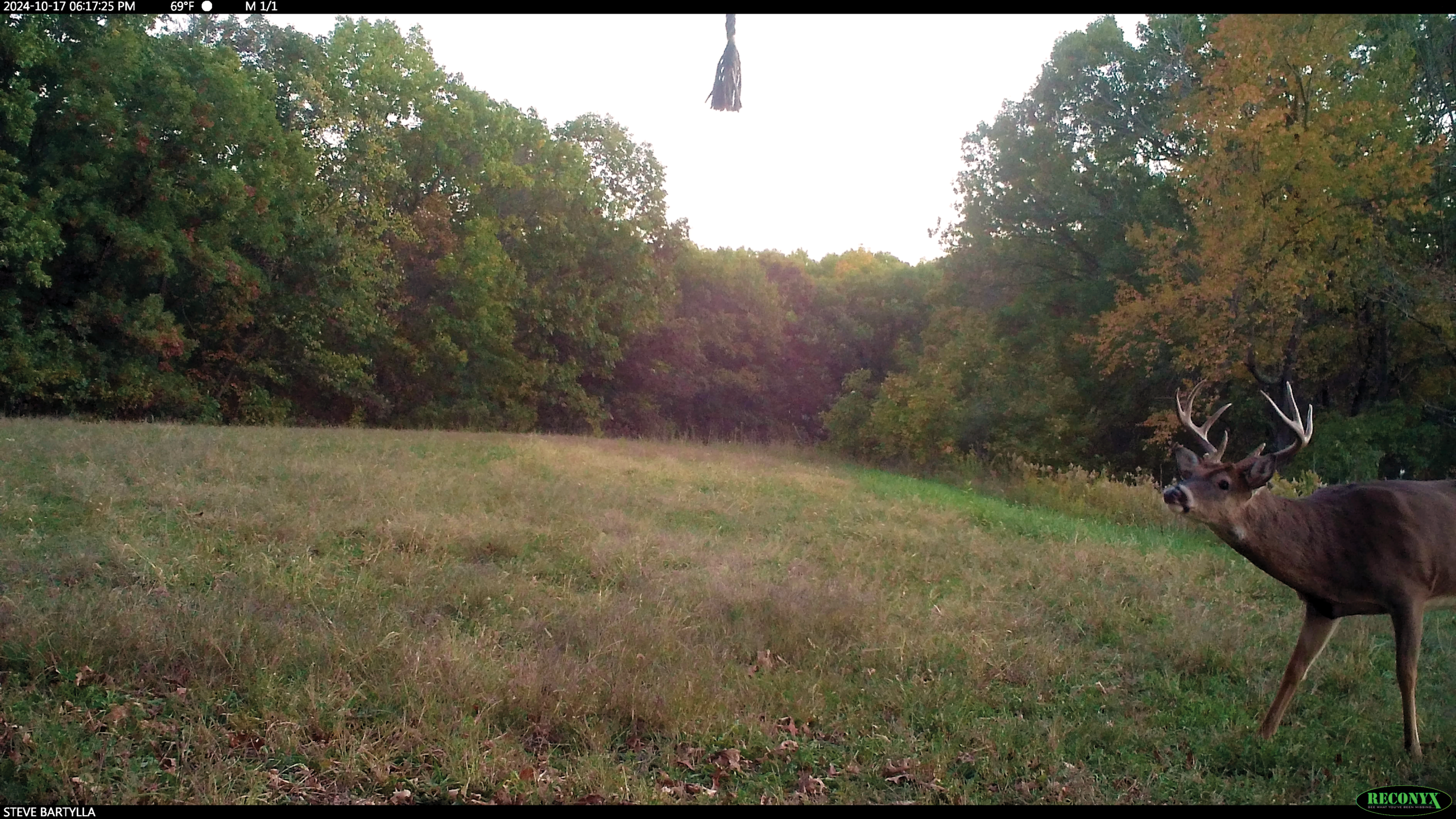
This is also when Mr. Big can go on excursions even more than during peak breeding, looking for those last does and/or searching for prime food sources.
With that foundation of understanding, we can certainly see that bucks are going through some changes in behavior. It starts with them trying to lock their spot in the buck hierarchy to maxing breeding opportunities and minimize life threatening fights.
Then, it’s all about breeding, with the majority of does entering estrus. Unfortunately for the bucks, all that comes at the price of an average of 25-30% body weight loss. Once that’s occurred, it creates a need to focus on quality feed, while still trying to take advantage of the trickle of breeding opportunities still out there.
That’s seemingly a lot to keep up with!
Factors that Help
Luckily, there’s stuff working in our favor, as well. Heck, the testosterone levels that are driving them to take the steps to perpetuate the species is a big plus for us hunters, too!
It’s the increasing testosterone levels that are inspiring the bucks to signpost with rubs and scrapes, more, and increases their desire to both breed and being willing to fight to do it. Add it all together and it gets bucks to typically move way more during legal hours, while covering more ground than they typically do. Toss in that those same testosterone levels also make them more receptive to calls and those advantages for us are starting to stack up.
A big one that’s rarely talked about, though, is those same increased testosterone levels and that burning desire to breed make Mr. Big often WAY more tolerant of our disturbances, even when spooking him. That same buck you just blew out coming in to stand likely won’t hesitate to follow a pretty smelling doe right back there!
With that in mind, it only makes sense to be a bit more aggressive during the peak breeding phase. That buck we may have bumped off his patterns in October, inspiring him to stay on the other side of the fence more, is far more likely to dismiss the encounter within moments of it being over in mid-November, when he has testosterone maxing and breeding on the brain.
Speaking of which, it’s super easy to figure out what mature bucks want during these phases. It’s primarily positioning themselves for and then taking advantage of breeding opportunities.
Putting Yourself in the Right Spot
All that’s left is determining how they get what they want during these phases. During the scrape phase it’s advertising with scrapes and rubs, as well as posturing and sparing to advertise themselves and claim their position in the buck hierarchy. This all makes scrape hunting, back in cover the bucks feel safe in, a great tactic. At the same time, from now on through the end of season, one may as well toss some calls at Mr. Big, if spotted going the other way, out of range.
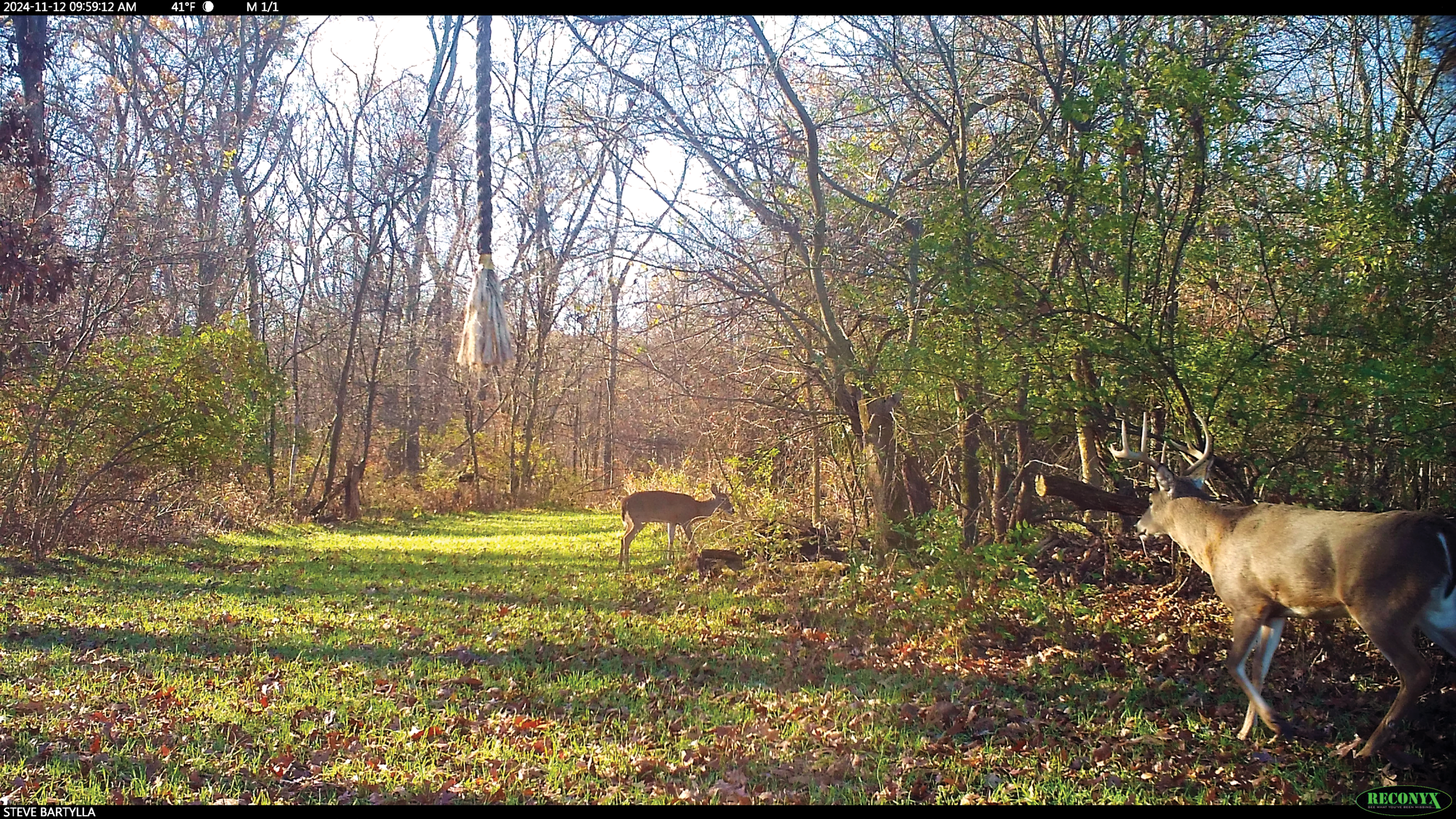
I approach the chase and breeding phases the same. Mr. Big uses his nose more than anything else to find receptive does, and he’s good at finding them. He merely scent checks the doe concentrations. That makes hunting the downwind side of doe bedding in the AMs on through until the PM feeding shift a great choice. During the PM feeding shift, hunting prime doe food or the trails leading to them are great choices and hunting funnels separating doe groups is great all day.
During the post rut, I find hunting established doe bedding in the AMs and food related stands in the PMs to be very effective.
Conclusion
The rut may seem all sorts of random, but it really isn’t. The mature bucks are masters at the art of maxing breeding opportunities, while striving to minimize wasted efforts. Frankly, if they want to survive the extreme weight loss that results from the rut, they can’t be wasting efforts.
Luckily for us, when we understand all this we can see a predictability to the rut and take a ton of the misses out of the equation!
Check out other articles by the author: